The Operation:
From Idea to Opening Night.
The part the white papers skip: the questions that shape a project before any hardware, the money, the people, the calendar, the safety file, what it takes to keep an attraction excellent on day 400, how to choose partners, and the outdoor spectacular that made this discipline famous. If you are arriving mid-handbook, part one sets the scene, and the illusion and the machinery carry everything this part budgets for.
Four Questions Before Any Hardware
Every project that went wrong that we have ever been shown went wrong before the first projector was ordered. The failure was always upstream, in questions that were skipped because they sounded administrative. They are the specification itself, and each deserves its own meeting.
Why Does This Exist?
A city-funded festival piece, a ticketed immersive attraction, a product launch and a permanent venue installation are four different projects that happen to share equipment. The festival optimises for spectacle per night and tears down in a week; its investor is often public, and its success is measured in attendance and civic pride. The attraction optimises for cost per operating hour across years, which changes everything from light-source choice to serviceability, and its investor expects the ticket revenue to model like a business. The launch optimises for cameras, which are a harsher judge than any audience, and its return is counted in coverage. The permanent installation optimises for boredom: it must work every day without a technician in the building. Decide which of these you are before anyone quotes you anything, because the right rig for one is the wrong rig for the others, and because the answer names your investor, and the investor's yardstick is the project's real specification.
What Is the Show?
Video alone, or video with live performers in front of it? A synchronised score? Conventional stage lighting sharing the object? Props and scenic pieces alongside the projection? Interactivity, where the audience's movement or sound changes the content? Each yes adds a subsystem, a department and a rehearsal burden. The single most consequential answer is performers: the moment a person stands between projector and surface, you have shadows to manage, sightlines to protect, and light in someone's eyes to avoid, and the entire placement problem of part three changes shape.
Where Does It Happen?
Indoors or out. Owned venue or borrowed monument. Is there physical space for the projectors at the distances the lenses need, with power, with rigging, with access for a technician and a ladder? What is the ambient light doing at showtime, and who controls it? What are the site's humidity, temperature range and altitude doing to the equipment list? Outdoors, add weather: enclosures, wind load on anything flown, drainage under anything floor-standing. A surprising number of projects discover at the survey that the perfect projector position is the middle of a road, and the second-best one is a tree canopy. The survey is the answer to all of it, which is why it appears in every chapter of this part.
When, and for How Long?
One night, a season, or years. Nightly show or continuous ambient loop. A hard broadcast start or doors that open when ready. The duration question is secretly the budget question: rental gear and a crew make sense for a weekend and are ruinous across a year, while a permanent installation justifies laser light sources, fixed rigging and monitoring that a one-off never would. It also sets the maintenance model, the seasonal contingency (a winter festival plans for snow on the enclosures; a summer season plans for heat derating), and the content refresh cadence that chapter six treats as the lifeblood of an attraction.
On Money
Budgets for projected experiences split four ways, technology, content, installation, operations, and are justified by a fifth line, the return. The projects that end happily are the ones where all five lines were real numbers before anything was ordered.
The Cost Lines
- Technology. Projectors, lenses, playback, network, rigging, audio, control. The good news a decade of progress bought: brighter machines mean fewer machines for the same canvas, and the tooling (automated alignment, monitoring) keeps cutting the labor attached to each one. The survey converts this line from a guess to a list, and the ownership question does the rest: for a short run, most or all of the fleet can be rented, which is how weekend spectaculars afford flagship machines; for a permanent venue, ownership plus service contracts wins within a year or two.
- Content. The line first-timers underestimate, routinely by half. Minutes of finished mapped animation take weeks to months of design, and the content is the show; the projectors are just how it arrives. The pipeline and its costs live in part two's content chapter; the budget rule of thumb is blunt: if content is not the largest creative line, the project is planning to be forgettable.
- Installation. Every projected experience is a one-off, and the install budget covers the rigging, cabling, enclosures, lifts, crew and commissioning weeks that turn a plan into a venue. It is also where contingency lives, because the site always has one surprise the survey missed.
- Operations. For anything longer than a run of nights: staffing, power, spares, cleaning, light-source depreciation, content refresh. Chapter six gives this its own treatment, because an attraction budgeted only to opening night is an attraction that decays in public.
The Return
The return is real and measurable, and the productions that get renewed are the ones that wrote down what it was supposed to be before opening night, and then measured it. The channels: ticket revenue (with timed entry, the box office is a throughput calculation you can model before building, and should); earned media and social reach (the phone-footage loop from part one, which for civic spectaculars is most of the point); sponsorship (a mapped show is premium inventory, and festivals fund themselves on it); secondary spend (bar, shop, dining, frequently the margin that makes the model work); and for brand work, dwell and memory, an hour of genuine attention priced against the advertising it replaces. Insurance, permits and a weather contingency belong on the cost side of the same sheet; a rained-out opening weekend is a modeled risk, not an act of fate.
If content is not the largest creative line in the budget, the project is planning to be forgettable.
The People
A mapping or an immersive venue is a production, with a crew list, and treating it as an equipment purchase is the second most common way to ruin one (the first is skipping the survey). Scale collapses several of these roles into one person; ambition expands them into departments. Either way, every hat below is worn by somebody on every project that opens well.
- The client sets the core requirement and owns the yardstick from chapter one. The best clients state the goal and the budget honestly and early; the projects that drift are usually reflecting a client who wouldn't.
- The producer owns the project end to end, creative and technical, and is the one person who can trade between them, spending a content week to save an install week and knowing when that trade is wrong.
- The project manager owns the hundreds of daily details: bookings, deliveries, dependencies, the schedule's honesty.
- The creative director owns the concept and the show's voice; content developers build the animation; a production designer unifies the physical and projected worlds so the venue and the picture read as one design.
- The technical director scopes and executes the system: the canvas arithmetic, the projector schedule, the playback architecture, all of part three made contractual.
- The installation team or systems integrator rigs, cables, aligns and optimises, and then does the precision work in the final weeks that the audience never sees and always feels.
- The municipal navigator, the role first-timers never budget: someone who speaks fluent city hall, walking the permits, bylaws and hearings that govern light, noise, advertising, temporary structures and crowds in public space. Approvals routinely take longer than content production, and they cannot be parallelised by enthusiasm.
- For an operating venue: a venue manager who owns the daily audience experience, a show caller or operator on live formats, and technicians on a maintenance rota. Chapter six is their book.
One structural note: the industry's best work keeps coming from teams where the creative and technical leads were in the same meetings from the first week. The alternative, a creative concept "thrown over the wall" to be engineered, produces the shows where the seams show, because the seams were organisational before they were optical.
The Calendar
A comfortable large project runs about six months. It compresses, at the price of options and sleep, and the most ambitious projects run a year or more. The shape, compressed:
The long pole is always content. Minutes of finished mapped animation pass through storyboard, styleframes, animation, review, revision and final render, and every week the survey slips, the content team authors against geometry that might be wrong. Sequence accordingly: scan early, model early, and let the creative run on the real canvas from the start. The second-longest pole is usually the permit track, which is why it starts in month four and why chapter five exists.
What compresses well: technology procurement (rental fleets exist to move fast), installation (with a good plan and a pre-tested rig, load-ins are days). What does not compress: content iteration, approvals, and the on-site nights where the show is actually finished. A schedule that "saves" time by cutting dry runs has not saved anything; it has moved the first rehearsal to opening night and sold tickets to it.
Dry runs deserve their own line: at showtime, in show darkness, with the real audio, days before the audience. Real content finds problems that test patterns bless: the pale scene that reveals the blend, the strobe cue that upsets a camera, the corner of the canvas that a streetlight owns after 9 pm. Fix them in the quiet. Then, on the night, the part every guide forgets to say: stand with the audience for one run. It is the only measurement of the finished system that matters, and it is the reason everyone involved chose this strange trade.
Approvals, Safety and the Public
A projected spectacle in public space sits at the intersection of several bodies of law and one large crowd, and the productions that treat this file as seriously as the content file are, not coincidentally, the ones invited back.
The Approval Maze
Public projects answer to local government regulations that vary considerably, sometimes within the same city, and the show can be shaped or stopped by bylaws governing advertising (is a sponsor logo on a monument signage?), lighting and light pollution, noise curfews, temporary structures, public gatherings, traffic and parking. One event can need several approvals from several departments, occasionally with public hearings attached. This is the municipal navigator's whole job from the people chapter, and the practical rules are: start in writing early, budget the fees, and treat the approval schedule as a dependency on the critical path, because it is one.
The Safety File
- Laser projector compliance. High-power laser projectors carry regulatory hazard classifications; depending on class and jurisdiction they require defined exclusion zones around the beam path, physical barriers, warning signage, trained operators and sometimes formal variance paperwork. This is settled, documented practice, and the integrator should produce the compliance plan without being asked twice.
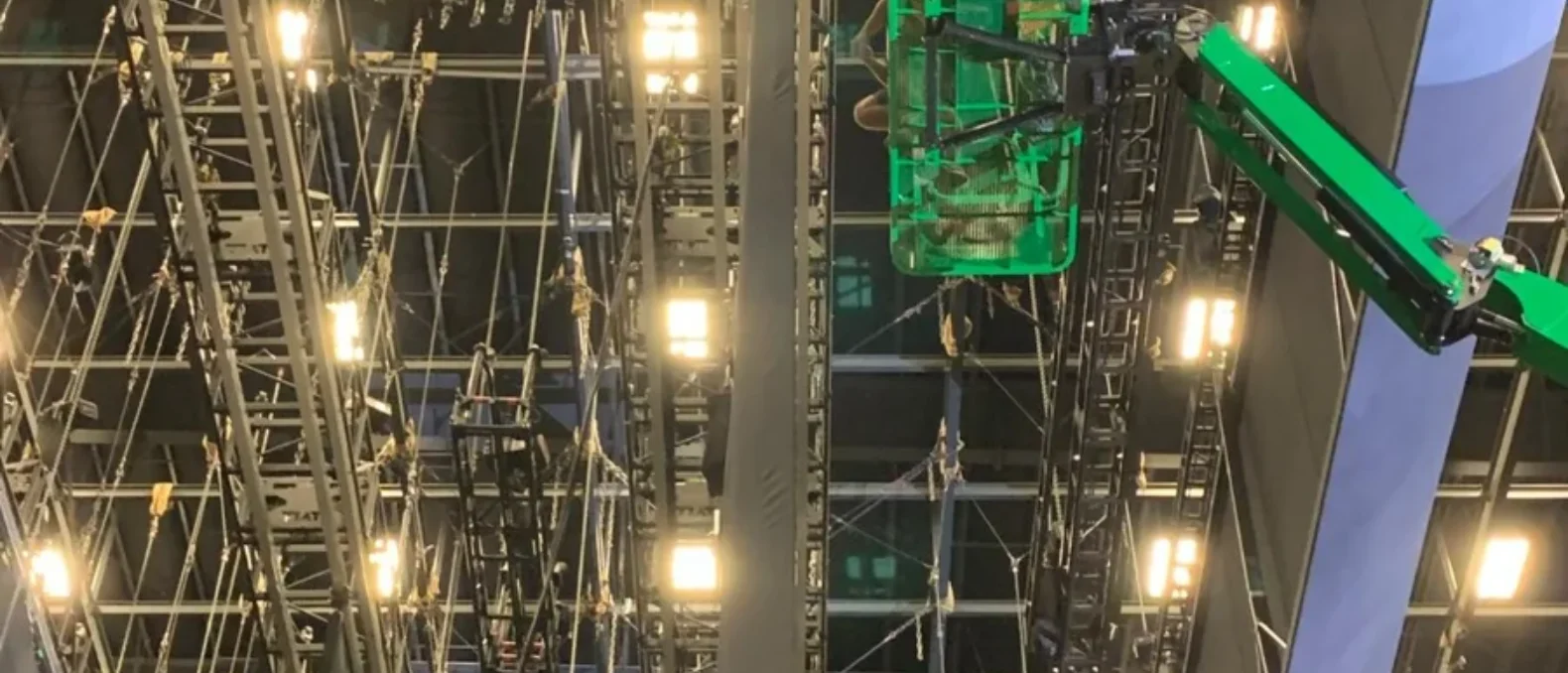
- Rigging. Everything flown is engineered, load-calculated and inspected, full stop. Trusses, frames and enclosures carry their certificates, and the wind load governs outdoor decisions long before aesthetics do.
- Power. Projectors want individual, stable supplies; distribution is certified; cabling in public space is protected and dressed. Generators and mains both need a plan for the moment they fail mid-show.
- The crowd. Site inspection for hazards, barriers where flow needs shaping, capacity calculations for the viewing zone, staff trained on equipment and on emergency procedure, and clear egress that survives the venue being dark, since dark is the product.
- Weather. Beyond enclosures: a decision tree, written in advance, for wind, rain and lightning, with named thresholds and a named person who calls the hold. The worst weather decisions are the ones improvised at showtime in front of a waiting crowd.
None of it is exotic, all of it is mandatory, and most of it is invisible when done well, which is the point: the audience's experience of a safe show is that safety never crossed their mind.
Operating an Attraction
A permanent or seasonal venue is a different animal from a show, because opening night is the beginning. The audience on day 400 paid the same ticket price as the audience on day one, and the venue's reputation is set by its median night, not its premiere. What follows are the numbers and habits that keep the median excellent.
The Governing Numbers
- Light-source hours. A laser source is typically rated to half brightness over twenty thousand hours, which a twelve-hour operating day spends in under five years, and the whole rig dims together. This is a depreciation schedule, not a surprise: brightness headroom is specified at purchase, output is measured quarterly, and the re-lamping (re-sourcing) budget exists from day one.
- Uptime. Remote monitoring watches every projector's temperature, hours and errors from one dashboard and emails the failing unit's name on Tuesday instead of during Saturday's peak. Paired with a spares strategy (a hot spare for the hero zones, a shelf spare per fleet type) and the redundancy decisions from part three, it converts failures from incidents into maintenance.
- Alignment cadence. Buildings breathe, trusses settle, and at fine pitch a millimeter is the whole pixel. The automated camera-based calibration of part three, scheduled nightly or weekly, keeps the picture from ever drifting into visitor-visible territory, and its logs are the early-warning system for mechanical problems.
- Show-readiness. The one-button morning from part three's control chapter: power-up, self-test, playback check and doors, on a schedule, with a short human checklist on top, sightline walk, audio spot-check, one minute of the darkest scene watched from the floor.
The Physical Plant
Lenses gather dust and lose contrast a percent at a time; filters clog; enclosure glass hazes. The cleaning rota is boring and it is worth real contrast, which makes it the cheapest image upgrade in the building. The canvas has its own care schedule: tensioned surfaces are inspected and re-tensioned per the fabricator's cadence (the material behaviour is documented on the build data page), kept clean per their finish, and treated as the optical component they are, because every photon of the show ends its journey there.
The Content Is the Season
Attractions live and die on repeat visitation, and repeat visitation is a content question. The repertoire model from part one lands here as an operating budget line: seasonal refreshes, guest productions, an evening format for a different audience than the afternoon's, and marketing beats tied to each. The venues that planned changeover into their physical design, canvases, rigging and playback that re-author in days, amortise the building across many shows; the venues that welded one show into place are one show old forever.
Measure the Experience, Not Just the Machines
Dwell time, repeat rate, capture and conversion at the door, the photo moment's social output, and the oldest instrument in entertainment: standing in the space, watching real visitors, once a week, at peak. Dashboards watch the projectors; somebody's eyes have to watch the show.
The Outdoor Spectacular
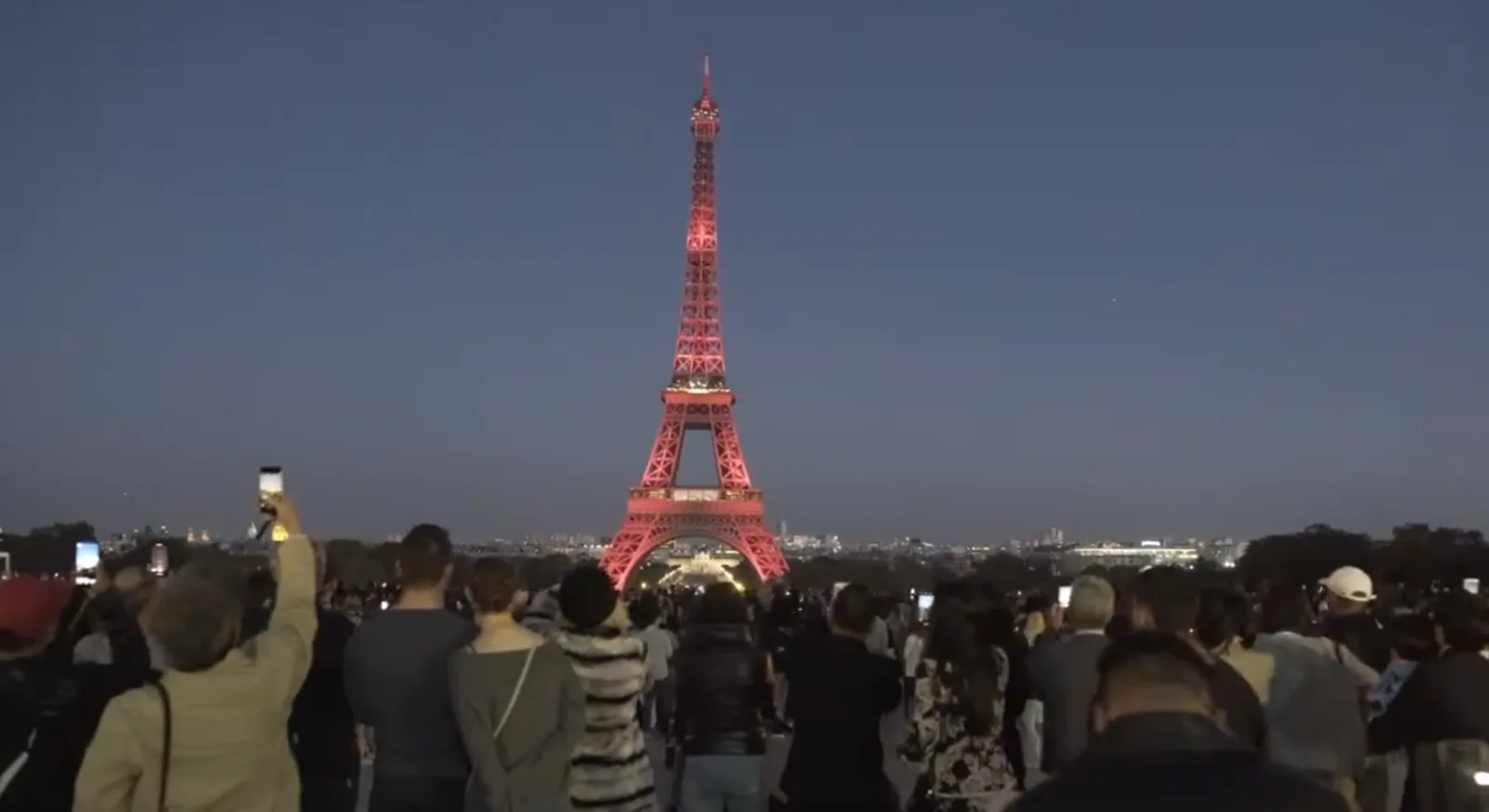
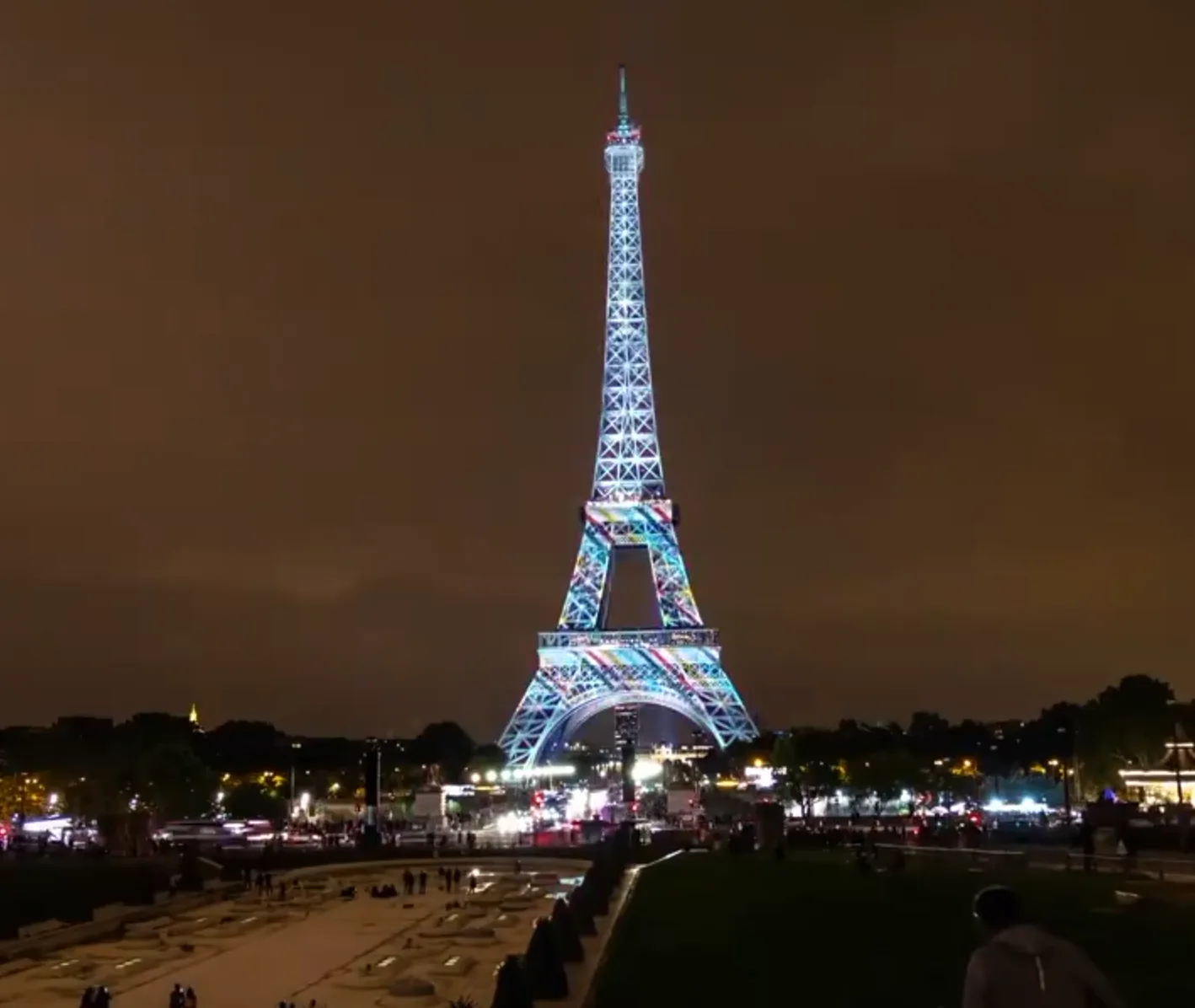
Everything so far has leaned toward the wrapped venue, because that is where this industry's growth and our own work concentrate. But the form that made projection mapping famous deserves its own chapter, gladly given: the building show. The cathedral front at a light festival, the riverside silos telling the city's history, the stadium exterior on match night, the monument brought to life for an anniversary. It remains the most democratic spectacle in the catalogue, free to anyone standing in the square, and when the story connects to the building's own history the effect compounds in a way no purpose-built venue can copy. The inverse belongs in the budget too: when a surface is chosen for scale or location rather than meaning, tying the story to it is real creative work, and the shows that skip that work read as screensavers on architecture.
Technically, the outdoor spectacular is this handbook run at maximum difficulty. The canvas is found, with every tax from part two's canvas chapter: mixed materials, uncontrolled reflectivity, geometry that must be scanned, weather that regrades the surface nightly. The ambient light is a city, negotiated streetlamp by streetlamp. The projector positions are wherever the streetscape allows, at throws measured in hundreds of meters, in enclosures built like small weatherproof buildings. The audience is unticketed and enormous, the cameras are everywhere, and the show usually has one weekend to be perfect. It is the discipline's Everest, and the teams that do it well are among the best technical crews in entertainment.
It is also, increasingly, a civic instrument. Light festivals anchor off-season tourism for entire cities; anniversary shows put a municipality's story on its own architecture; sport presentation turns a stadium's exterior into the region's largest shared screen. The commissioning pattern that works treats the spectacular as public art with an engineering department: a city or institution as patron, a creative team with authorship, and a technical crew given the survey time the form demands. The broadcast dimension keeps growing too, and it feeds back into the specification: a show watched by a hundred thousand phones and one broadcast truck is specified for the truck, per the camera clauses threaded through part three.
Two practical notes from the boundary between that world and ours. First, outdoor spectaculars increasingly incorporate built elements: a scrim across a gap in the architecture, a shaped surface extending a façade, a temporary structure that gives the show a stage the site never had, and those hybrid designs plan exactly like part two describes. Second, the tools transfer whole: the planner lays out façade rigs as readily as venue rigs, and the survey, scan, brightness and placement chapters apply without modification. If your project points outward at a building rather than inward at an audience, this handbook is still your handbook; only the wrapping changed.
Doing It
If you have read this far, you know more than most people who commission immersive work, and you have probably noticed the pattern: every chapter ends in a calculation that depends on your specific object, venue, audience and ambition. That is why the tools on this site exist, and why they are free to use without talking to anyone.
- The configurator settles the image itself: projector against surface grade against ambient light, with the black floor, image white and on-screen contrast computed live, and every configuration packed into a seed you can send around.
- The projection planner settles the geometry: a 3D venue where you place surfaces and projectors, choose lens families, aim beams, and print a plan a technical director can argue with. The manual walks every control.
- The field guide holds the single-image optics this handbook kept pointing at: black floors, lumens, arrays, gain, and the three numbers that describe any picture honestly.
- The range and the build data describe the surfaces themselves: the OP, AT and TS families, the grade ladder, and the material facts a fabricator needs.
And when the project is real enough to have a shape, talk to us. We demo rather than sample: at the facility in Hollywood, Los Angeles, with your content and, if it can be got into the building, your projector, or arranged around your project where it stands. Send a configurator seed or a planner file and the conversation starts from your numbers instead of from zero. The second age is being built one venue at a time, by people who take the felt quality of an audience's hour seriously. If that is the work you are doing, we would like to be underneath it.
Written by the people who make the surfaces, which means we have an interest, and also means this is the knowledge we stake orders on. If something here is wrong, unclear, or missing the case you are actually facing, write and tell us. info@qualia-forge.com