The Second Age of
Immersive Storytelling.
Cinema spent its first thirty years learning that it was not filmed theatre. Immersive entertainment is living that same moment right now: the novelty era is behind it, the storytelling era has begun, and the venues being built today are where the grammar gets written. This handbook is everything we know about that work, in four parts: this one on where the industry stands and where it is going, then the illusion, the machinery and the operation. It is a companion to the field guide, which covers the optics of a single image in depth.
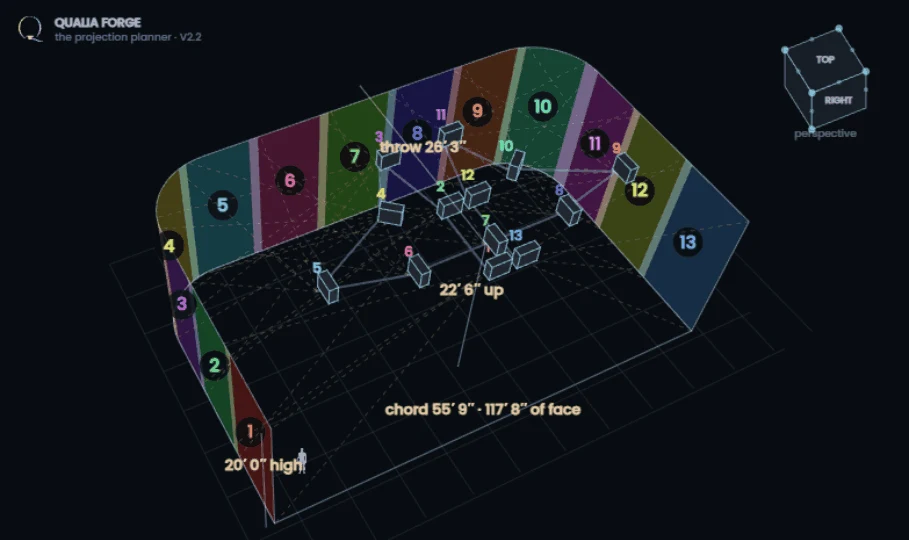 Open the planner ↗
A New Night Out
Something has shifted in what people leave the house for. The home screen has never been better, and that is exactly the problem it created for itself: when every living room has cinema-grade picture and the whole catalogue of everything, "watching something" stopped being a reason to go anywhere. What gets people out now is what the home screen cannot do: scale that surrounds you, a place that exists only there and only for a while, other people in the dark gasping at the same moment. Presence, in a word.
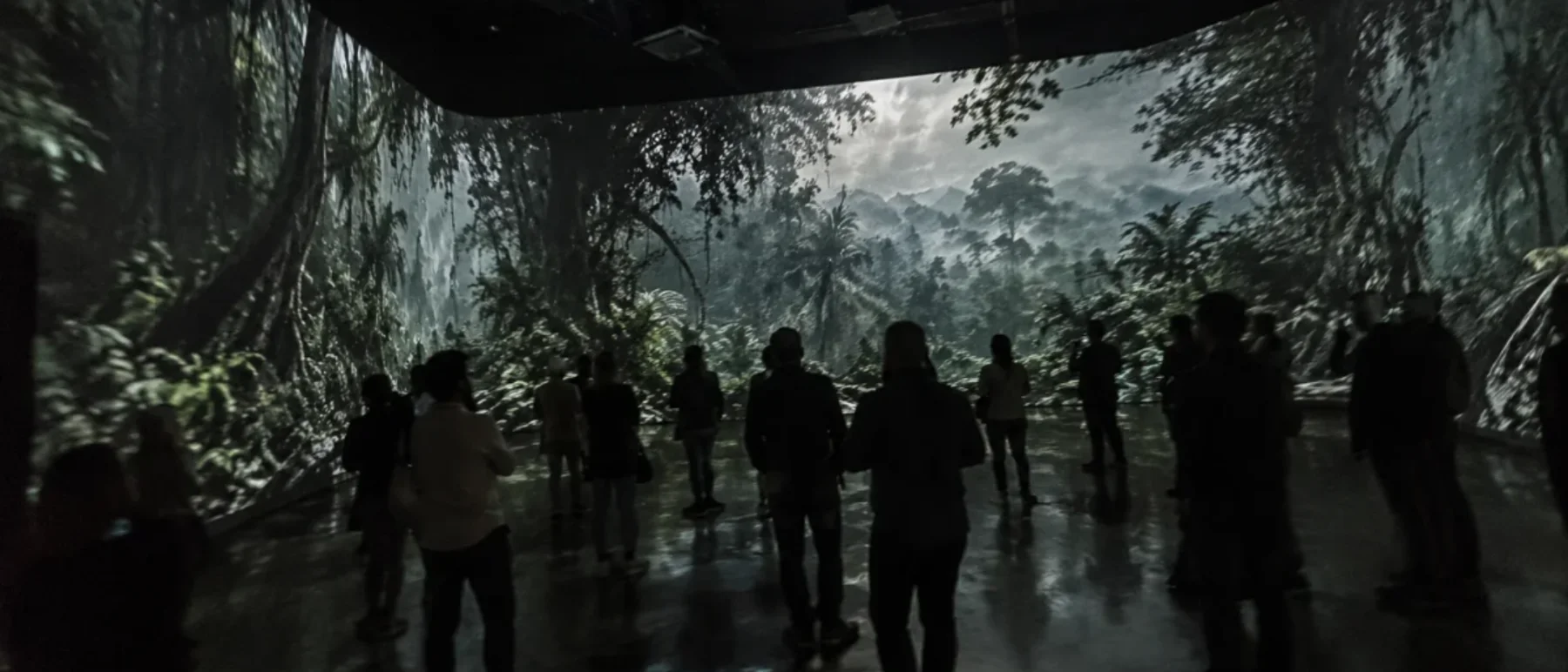
Out-of-home entertainment has reorganised itself around that appetite. The exhibition hall where the art is the walls and the floor and the ceiling. The dome that puts the audience inside the picture instead of in front of it. The dining experience where the table is the stage. The dark ride, the flagship retail space, the wellness venue, the touring spectacle that takes over an exhibition centre for a season. These are different businesses with different economics, and they are all selling the same underlying product: an hour inside an experience that cannot be received at home, only visited.
The commissioning side has broadened just as fast as the audience side. A decade ago, venue-scale projected experiences were commissioned almost entirely by museums, science centres and the occasional festival. Now the client list runs through entertainment groups building permanent attractions, rights holders looking for a physical life for their stories, cities buying cultural anchors and night-time economies, brands that want an hour of someone's genuine attention instead of a skipped advertisement, real estate developers who have noticed that an experience anchors foot traffic the way department stores used to, and hospitality groups for whom a projected environment is the difference between a dinner and a destination. Each of these buyers has different success criteria, which is why part four of this handbook spends so much time on the question of what a given project is actually for.
The medium underneath nearly all of it is projected light, for a practical reason: it is the only display technology that scales to architecture, wraps geometry, disappears when it should, and prices out at venue scale. LED walls own the bright showroom and the stage backdrop; the moment the image has to be forty meters wide, or curved, or overhead, or gone entirely between scenes, light thrown onto a surface wins. A projected venue can also be struck and rebuilt as something else, which matters to an industry that refreshes its shows the way theatres refresh their seasons. Which means the craft of this industry, under all the creative ambition, is the old craft of projection: light, optics, surfaces and geometry. That craft is what the rest of this handbook is about.
The product is a place where something happens to you; the video is one of the materials it is built from.
It became a real industry remarkably quickly. The building blocks, bright projectors, media servers, mapping software, spatial audio, existed separately for decades in staging, theme parks and planetariums. What fused them into a commercial category was a run of demonstrations that the public would pay, repeatedly and at scale, for projected environments: the light festivals that turned city centres into galleries one week a year, the immersive art exhibitions that turned that appetite into a year-round ticket, and the venues that turned the ticket into a permanent address. Every part of the supply chain has since professionalised around it, from projector manufacturers designing for 24/7 duty cycles to insurers who now have actuarial tables for projection rigging. When the infrastructure of an art form gets boring, the art form is real.
What Audiences Actually Buy
The venues that thrive are precise about what they sell, and the ones that struggle usually misidentified it, so the product deserves a careful definition before any talk of technology. When someone buys a ticket to an immersive experience, they are buying several distinct things at once, and each one is designable.
Presence
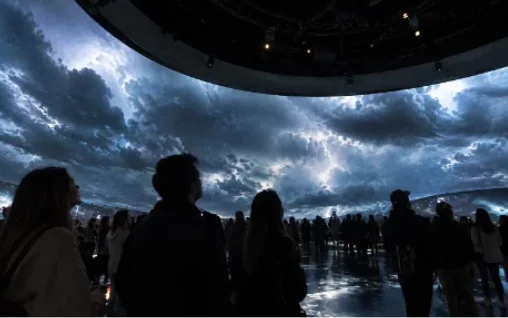
The core purchase is the felt fact of being somewhere else. Every screen offers a view of somewhere else; this is standing in it, with the image continuing past the corner of the eye in every direction. Peripheral vision is the trigger: when the picture extends beyond roughly ninety degrees of view, the brain stops treating it as an object and starts treating it as an environment, and the body answers through balance, skin and breath. The effect is physiological, which is the reason edge-to-edge coverage, deep blacks and clean geometry matter more in this industry than resolution: presence survives soft pixels, and it does not survive a visible seam between the world and the venue standing behind it. The full account of why presence happens at all, from the body inward, is our thesis: The Art of Being Somewhere, Part II.
Togetherness
People overwhelmingly attend in groups, and the shared gasp is half the memory. This is entertainment's oldest asset, the thing theatre and cinema and stadium sport have always sold, and immersive venues inherit it with a twist: the audience is inside the picture together, visible to each other, part of each other's experience. Good spatial shows use that deliberately, silhouettes against a bright scene, a crowd turning as one to follow a sound, a child running into a field of reactive light while the adults watch the child rather than the wall. A show that would work identically in an empty venue is leaving one of its strongest materials unused.
Scarcity
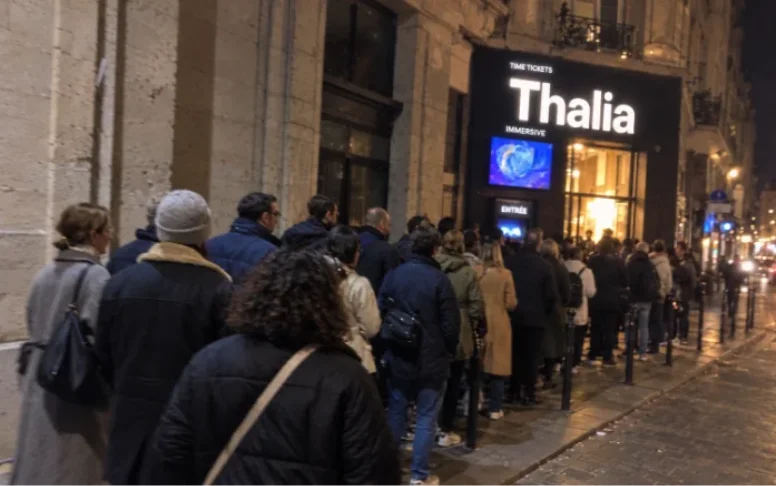
Here and only here; now and only for a season. Scarcity is what separates a visit from a stream, and it is a designed property: limited runs, timed entry, evening-only formats, seasonal refreshes. It is also the honest answer to the question every investor asks about repeat visitation. People return to places, not to files. A venue that treats itself as a place with a changing repertoire, rather than as a fixed show with a long tail, is aligned with how its audience already thinks.
The Photo Paradox
The experiences are simultaneously unphotographable, in that no phone clip carries the feeling, and enormously photogenic, in that the clips travel anyway and sell the tickets. Both halves are worth designing for on purpose: a show needs moments composed to be photographed, bright enough to survive a phone sensor (a real brightness requirement, taken up in part three), and it needs the parts that resist the camera entirely, the enveloping dark, the sound behind you, the floor moving under the image, because those are what make the visitor say "the video doesn't do it justice", which is the single best advertisement the form has.
Accessibility of Meaning
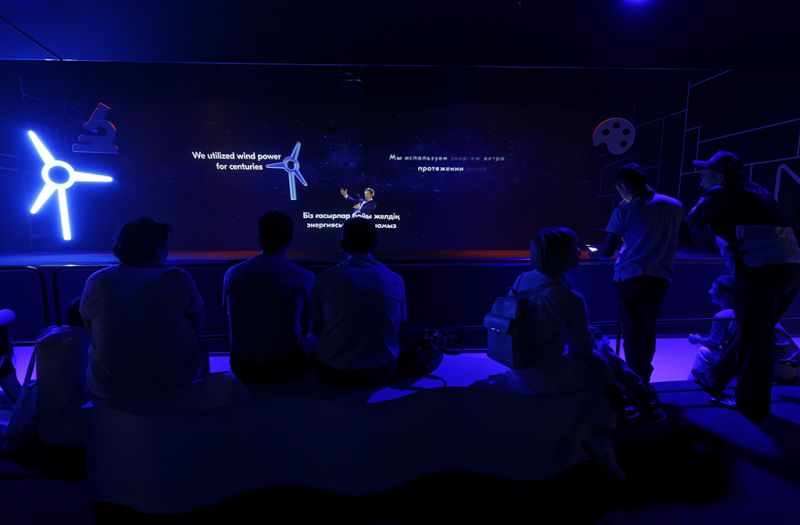
Projected storytelling crosses language and age with almost nothing lost. A show built from image, music and space plays identically to a six-year-old, her grandparents and a tourist with no local language, which is a commercial property as much as an artistic one: the addressable audience of a spatial show is close to everyone who can walk in. The forms that lean on this, light festivals, art halls, domes, are the ones that fill on weekday afternoons with school groups and on weekend evenings with dates, from the same content.
People return to places, not to files. Scarcity, togetherness and presence are designed properties, and every one of them has an engineering consequence somewhere in parts two and three.
The Second Age
Where does this industry stand in the story of its own medium? Early, and at a very particular kind of early, and cinema is the best map of what that looks like.
When film arrived in the 1890s, the moving image itself was the show. Audiences paid to watch a train pull into a station, waves break on a beach, workers leave a factory. Film historians call that first era the cinema of attractions: the technology was the attraction, spectacle was the content, and it was enough, for a while, because nobody had ever seen anything move on a wall before. Then it stopped being enough, because novelty is a currency that spends itself. What saved the medium was the slow invention of a grammar: the cut, the close-up, cross-cutting between two places to build suspense, the discovery that a camera could be a narrator rather than a witness. It took roughly thirty years to get from the train arriving to films that could break your heart, and once the grammar existed, the golden age followed.
Immersive entertainment has just lived its own cinema-of-attractions era. The first wave of immersive halls sold the technology itself: step inside a painting, stand in a mirrored infinity, watch a space bloom around you. It worked, spectacularly, and it filled venues on every continent, and it taught the audience the vocabulary of walking into a picture. It also spent the novelty, on schedule. A visitor who has been inside three wraparound galleries no longer buys a ticket to be inside a fourth; they buy a ticket for what happens in there.
That is the threshold the industry is standing on now, and it is why we describe this as the second age. Two things are maturing at once:
- The technology has stopped being the constraint. Lumens cost a fraction of what they did a decade ago. Playback that once needed a control room now rides inside the projectors themselves. Camera-based systems align a seventy-projector canvas in minutes instead of nights. Real-time engines let a scene respond to the people standing in it. The machinery, in short, has become dependable enough to be invisible, which is the precondition for art in every medium.
- The grammar is being written. The interesting work in immersive venues is no longer "look where the image is". It is structure: scenes that are places, transitions that move a whole audience without a cut, attention choreographed by light and sound instead of a frame, stories that unfold around a visitor who is free to look anywhere. Part two's chapter on writing for a space is a working inventory of that grammar as it stands, and it will be out of date in five years, which is the most exciting sentence in this handbook.
The cinema parallel carries one more useful beat. When synchronised sound arrived in the late 1920s, it reorganised the art form: it ended careers, started others, and made the previous decade's masterpieces look suddenly historical. Immersive entertainment's sound moment is arguably arriving now in the shape of real-time responsiveness: spaces that know the audience is there and answer them. Like early sound, the first uses are gimmicks; like early sound, the medium will absorb it until its absence, a space that ignores you, feels dated. Part two treats interactivity with the same mixture of respect and caution.
Nobody standing in 1915 could name the films of 1940. But they could see the direction: technology receding, story advancing, form finding its own native language rather than borrowing theatre's. That is the direction visible from here. The venues being commissioned now, the ones conceived as stories first and technology second, are the ones the golden age will be traced back to.
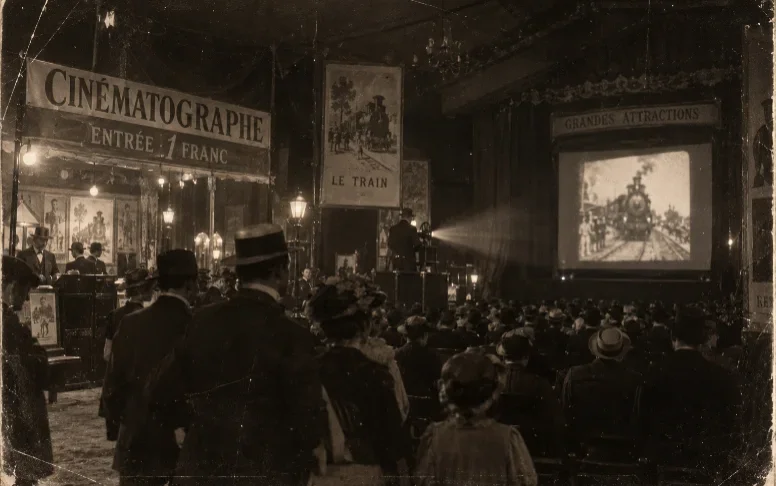
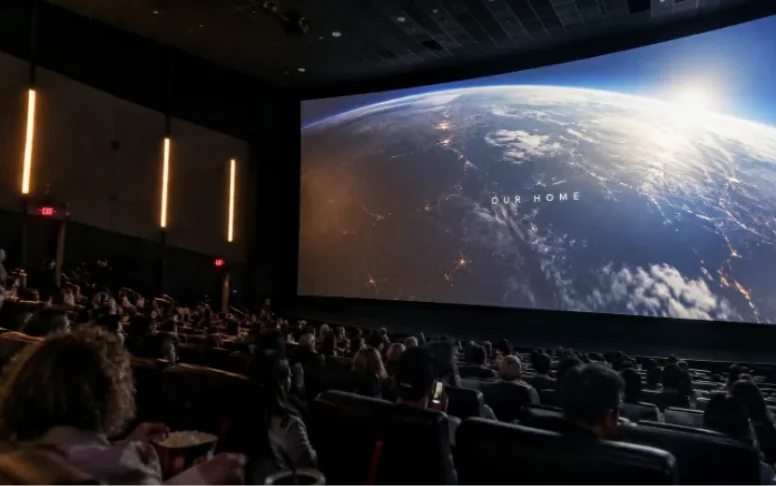
What the First Wave Proved
It has become fashionable in creative circles to condescend to the first-wave immersive art halls, and this handbook declines to join in. The first wave was the medium's proof of concept, conducted in public, at commercial risk, on five continents, and everything this industry now knows about its own audience was learned there. It deserves an honest audit: what it proved, and what it exhausted.
Proved: The Demand Is Real and Broad
The halls demonstrated that ordinary audiences, not gallery audiences, not technology enthusiasts, would pay serious ticket prices, repeatedly, for projected environments, and would do so in cities of every size. They proved the demographic breadth of the last chapter: school groups, dates, tourists, grandparents, all in the same session. And they proved the marketing loop: the shows filled their own funnels through their visitors' cameras, at essentially zero media cost, which no other entertainment format of their scale can claim.
Proved: The Operations Can Work
Less glamorously and just as importantly, the first wave taught the industry how to run these venues: timed entry and throughput, dwell curves, the bar and the gift shop, cleaning around floor projection, staffing a space with no stage and no seats, and keeping a seventy-projector canvas aligned across a nine-month run. The operational playbook in part four exists because hundreds of venues wrote it the hard way.
Exhausted: Novelty as the Headline
What the first wave spent, permanently, is the ticket sold on the technology alone. The phrase "step inside the painting" did a decade of work and has retired. The audience it built did not disappear; it matured, much as early film audiences did, and it now shops for immersive experiences the way it shops for films: by what the show is about, who made it, and what a friend said. Venues still selling wallpaper, beautiful, aimless, wall-filling content, are discovering that the second visit never comes.
The Lesson Underneath
Put the audit together and the lesson is precise: the format is a venue, not a show. A hall with projection in its bones is a theatre for a new kind of repertoire, and its economics reward what theatre economics have always rewarded: a strong opening production, a pipeline of the next ones, and a physical plant engineered for fast changeover, which reaches all the way down to the choice of canvases and rigging in part two. The first wave built the theatres. The second age is about what plays in them.
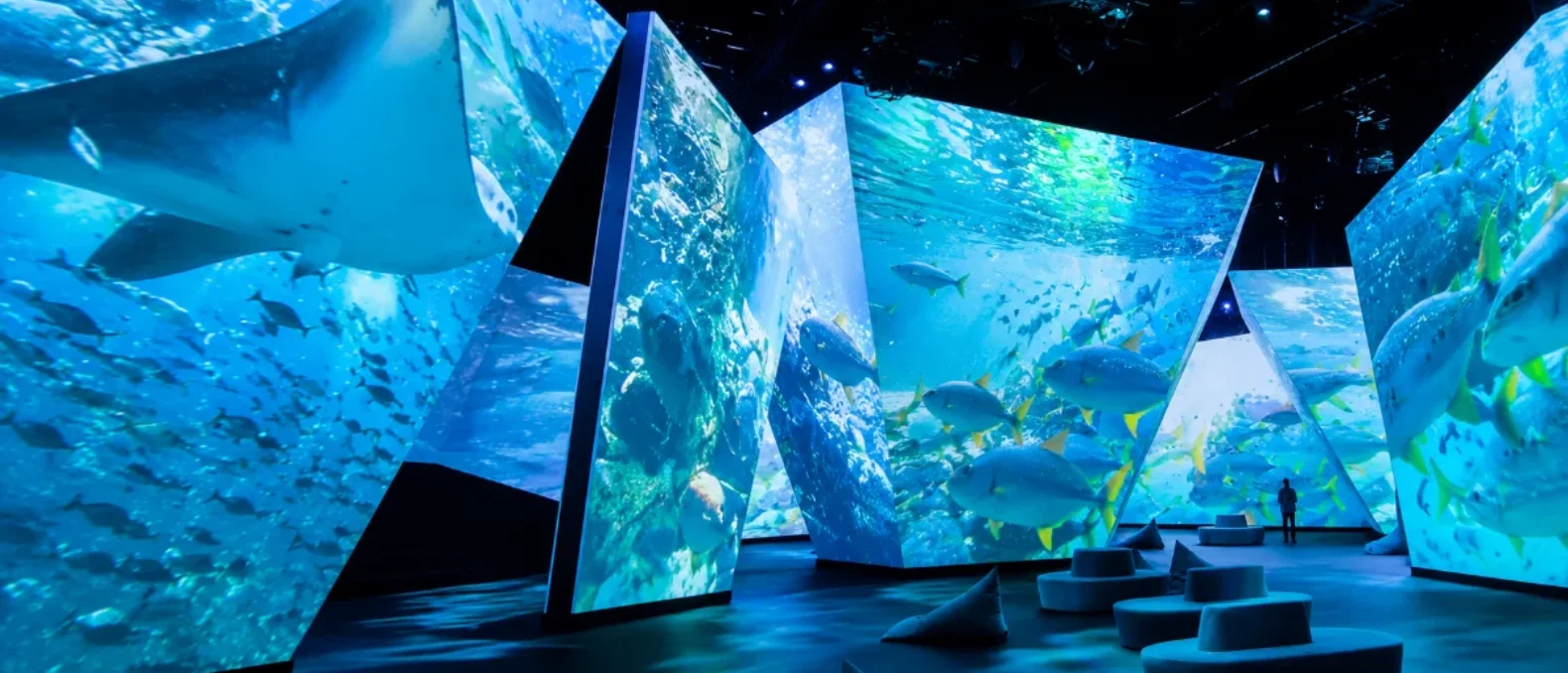
The Forms of the Medium
Immersive entertainment is a family of forms, each with its own economics, design constraints and craft emphasis. A working taxonomy, with what defines success in each:
The Wraparound Hall
The flagship form: a large volume with continuous image on the walls and usually the floor, audience free-roaming, show running as a loop. Its design constraints are the harshest optics in the industry, self-bounce between facing image walls and visitors standing at touching distance from the canvas, which is why it anchors so much of parts two and three. Success is dwell and repeat: a hall lives on visitors who stay past their own expectations and return for the next production.
The Dome
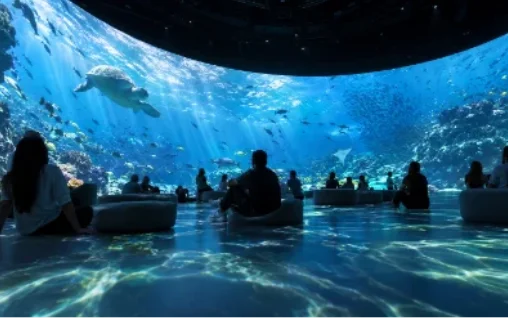
The strongest presence effect in the catalogue, because a dome has no edges for peripheral vision to find; the picture does not end, and the brain stops looking for the exit. Inherited whole from planetarium practice, now serving concerts, films made for the format, and meditative programming. Its constraints are geometric: fisheye content pipelines, radial arrays, blends curving in two axes, and a seating plan that decides where distortion is allowed to live.
The Journey
A sequence of volumes walked in order: the dark ride's walkable cousin, and the form closest to conventional narrative, since the designer controls sequence. Every scene is also a queue, so throughput engineering shapes the storytelling directly, and the strongest examples choreograph the audience's movement as part of the show itself. The hybrid, a walked journey opening into a looping finale hall, has quietly become the standard plan of the modern immersive attraction, because it spends sequence where the story needs it and capacity where the box office does.
The Intimate Formats
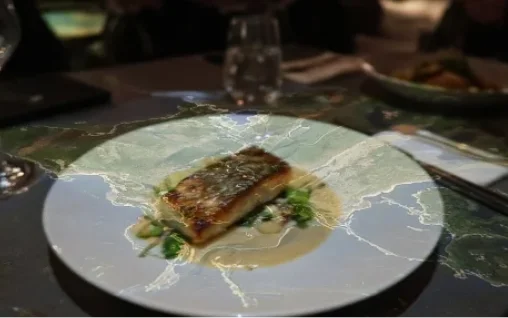
Dining experiences where the table is the stage, small-capacity theatre pieces, wellness and hospitality environments. Tiny canvases, tiny audiences, premium pricing, and the most exacting craft per square meter in the industry: at arm's length, every pixel, every alignment error and every lifted black is on inspection. These formats are where surface quality and geometry discipline show their worth most nakedly.
The Brand and Retail Space
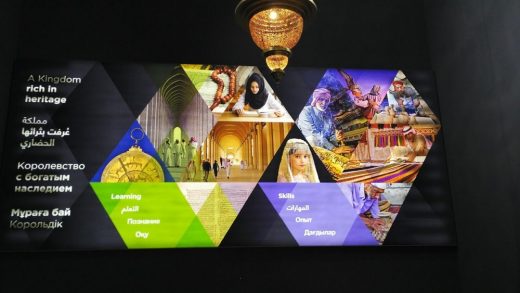
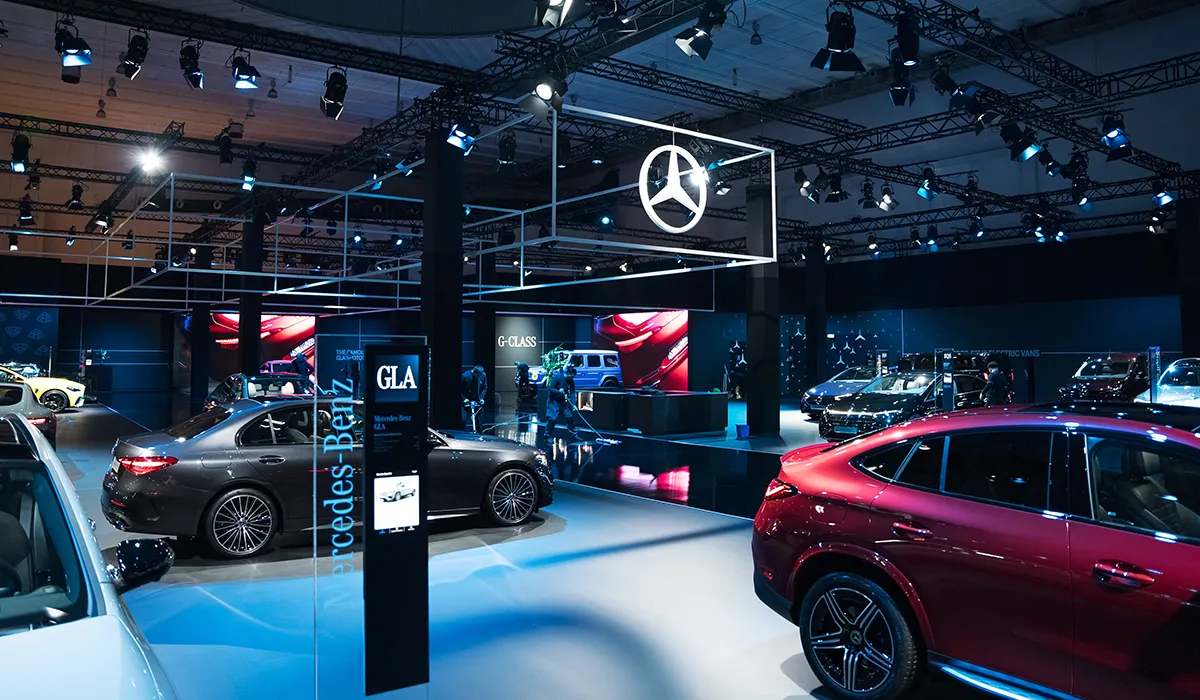
An experience whose ticket is attention rather than money: flagship stores, showrooms, product launches, pavilions. The commercial ask is dwell and memory, the design risk is the advertisement nobody chose to watch, and the successful examples behave like the entertainment forms, a real show, really authored, with the brand as patron rather than protagonist.
The Arena and the Stage
Projection as scenography: mapped stage sets, court and ice projection in sport presentation, concert surfaces that dress and undress a stadium between songs. Here projection serves a live event's rhythm, which means broadcast cameras, performer sightlines and cue-accurate playback dominate the engineering, and the surfaces are chosen for what they do when the projection is off as much as on, which is where scrims and dark scenic surfaces earn their place.
The Civic Spectacular
The façade shows and light festivals that made the discipline famous: free, outdoor, enormous, and the most demanding technical form of all. It gets its own chapter at the end of part four, treated with the respect the discipline's Everest deserves.
The forms share one spine: a canvas, light against ambient light, an array of projectors, a playback system, and a production that has to open on a date. That spine is parts two through four, and it is why a team fluent in one form can cross to another with their craft intact.
Why We Are Called Qualia Forge
A short chapter, because a company explaining its own name is one drink away from a company reciting poetry. But the name is load-bearing, and it says what we believe about this industry, so it has earned its paragraphs.
Qualia is the philosopher's word for the felt quality of experience: the redness of red, the specific interior fact of what something is like from the inside. Its defining property is that it cannot be transmitted. You can describe a sunset to someone forever and hand them nothing; the only way to give a person an experience is to build the conditions and stand them inside. That is the nature of experience itself, and it is the entire reason out-of-home entertainment exists. Every immersive venue is a machine for manufacturing first-person experience, the one product that cannot be streamed.
A forge is where hard material is worked into new shapes by people who respect the material. We like both halves of that. The material here is physical: light, optics, fabric, geometry, the behaviour of a surface under a beam and under a city's stray glow. Our own part of the stack is deliberately deep and deliberately narrow: we engineer projection surfaces, the layer where every photon of every story finally lands, and we build the free tools, the configurator and the planner, that let anyone work the physics honestly before money moves. We do not make projectors, servers or content, and this handbook covers them anyway, because a surface specified without understanding the system around it is a surface specified badly.
Forging new realities, then, is the job description of this industry's second age: taking the felt quality of experience seriously enough to engineer for it. The rest of this handbook is that engineering.
The Road to the Golden Age
If the cinema parallel holds, the golden age is a checklist more than a mystery, and most of it is visible from here. What had to mature in film between the attractions era and the golden age has direct equivalents, and each is partway built.
- Authorship. Films acquired directors the audience followed. Immersive work is acquiring named creators and studios whose next production is itself the draw, which changes commissioning: venues begin to book authors, not just content. The repertoire model from chapter four is the venue-side half of the same shift.
- A professional pipeline. Film built a craft industry: cinematographers, editors, sound designers, with shared vocabulary and training. The equivalent trades here, spatial directors, canvas architects, alignment engineers, show programmers, exist and are consolidating from staging, theme parks, games and theatre. Parts two through four of this handbook are, in effect, a syllabus for that pipeline.
- Stories both borrowed and native. Cinema's golden age ran adapted novels alongside stories only film could tell. The equivalent here is already visible: beloved existing stories given physical form on one side, and on the other, native spatial works whose plots could not exist on a screen, stories about being somewhere. The second kind is rarer and, we suspect, where the era's masterpieces will come from.
- Venues built for the medium. Early film played in converted theatres until purpose-built cinemas arrived. Most immersive shows still play in converted halls. The purpose-built generation, geometry designed for image and sound together, dark-finish architecture, canvases and rigging engineered for changeover, is beginning, and it is where the built-canvas thinking of part two and the operations thinking of part four converge.
- Measurement. Box office made film a business someone could finance rationally. The equivalent instrumentation, dwell, repeat rate, capture and conversion, is arriving in this industry, and with it comes the financing that lets ambition scale.
None of this is a prediction that everything will be wonderful. Most films of the golden age were forgettable; most immersive productions of the coming decade will be too. The claim is narrower and more useful: the conditions under which masterpieces become possible are assembling now, and the people assembling them are the ones treating the medium as a storytelling form with an engineering discipline underneath, rather than either alone.
The rest of the handbook is the discipline. Part two is the craft: how the illusion works, how spaces are designed, how stories are written for them, and what they are built on. Part three is the engineering: the eye, the light, the machines and the systems that feed them. Part four is the production: the people, the money, the calendar, the safety file, the operation, and the outdoor spectacular. And when your project is real enough to have a shape, we demo rather than sample: at the facility in Hollywood, Los Angeles, with your content, or arranged around your project where it stands.
Written by the people who make the surfaces, which means we have an interest, and also means this is the knowledge we stake orders on. If something here is wrong, unclear, or missing the case you are actually facing, write and tell us. info@qualia-forge.com