
The Short Version · Projection Surfaces · Qualia Forge
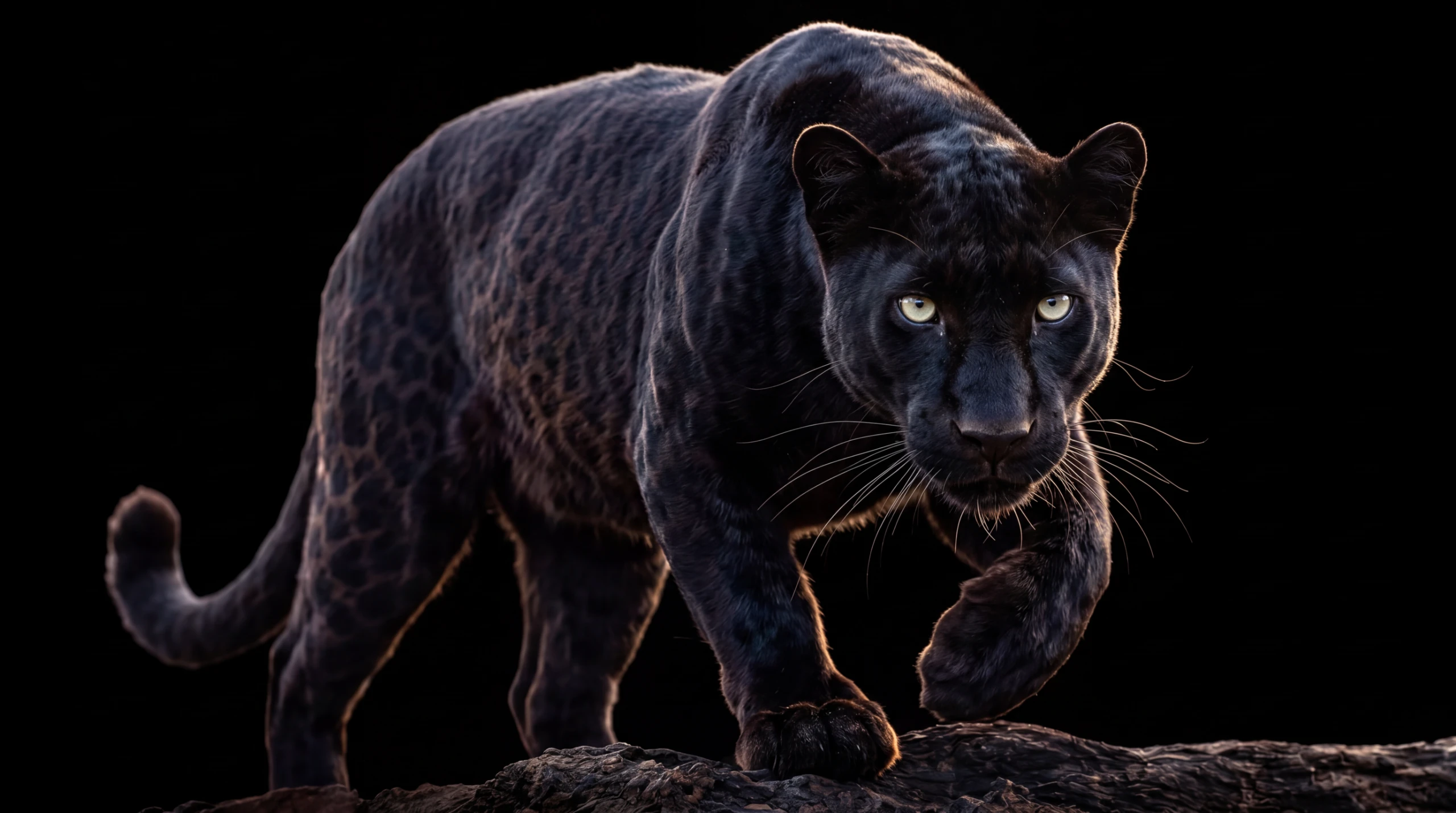
A black panther stepping out of deep black
QUALIA FORGE Forging New Realities Full version →
Projection Surfaces · The short version

A Screen That Works with the Lights On.

A normal projection screen is white, so any light in the space turns the picture gray. Ours is dark. It sends the projector’s picture back to you and soaks up the other light, so blacks stay black and colors stay true.

The essentials, in plain words. Specifications, build data and the planning tools are in the full version.

01 · Why dark

A Projector Can’t Make Black.

  1. A projector only adds light. It has no way to make anything darker.

  2. So the blackest black in any picture is the bare screen.

  3. On a white screen with the lights on, that’s gray. Ours is dark, and soaks up the light around it.

Try it Turn the lights up, then drag the line.
Light in the space
Projector
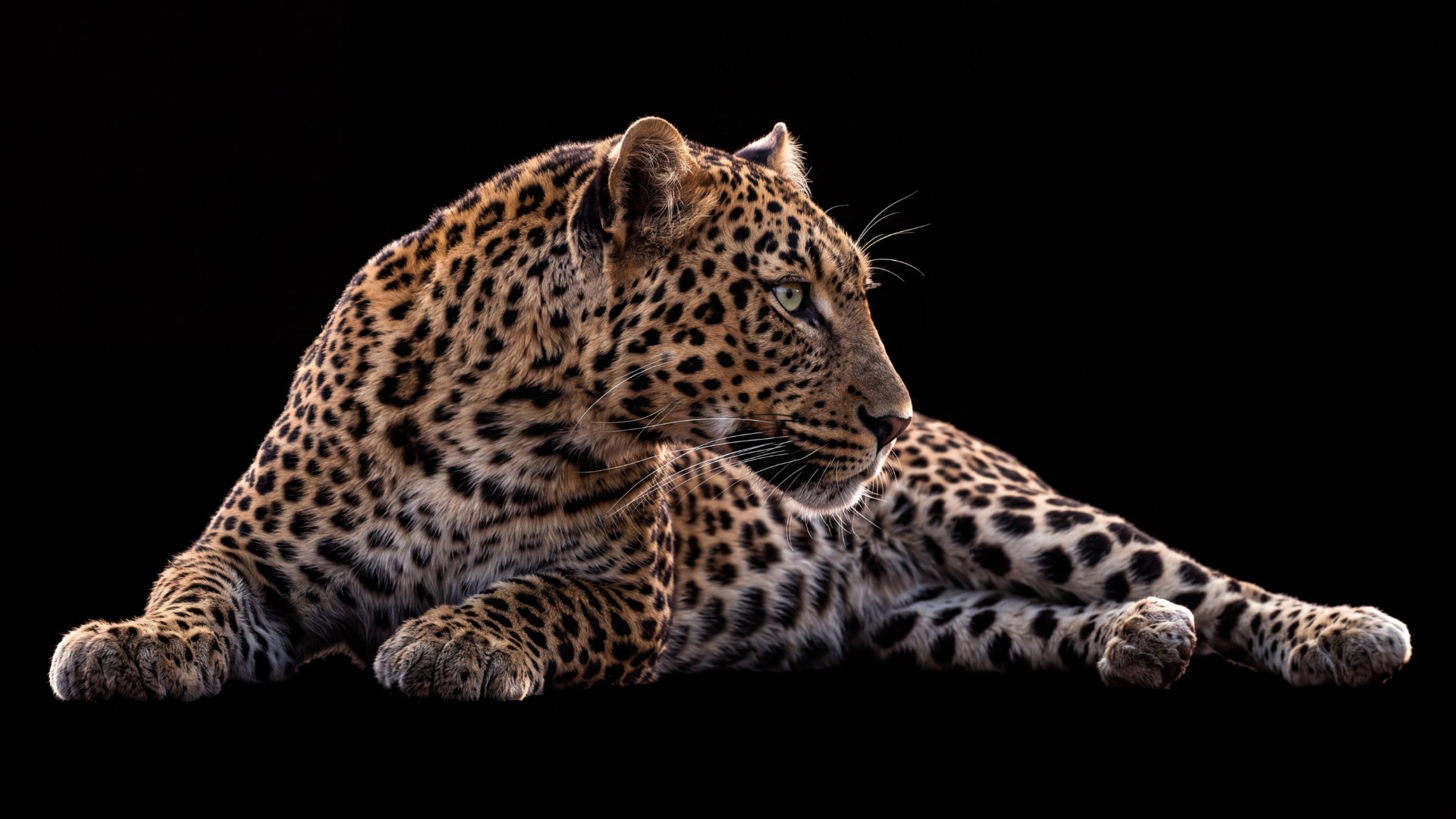
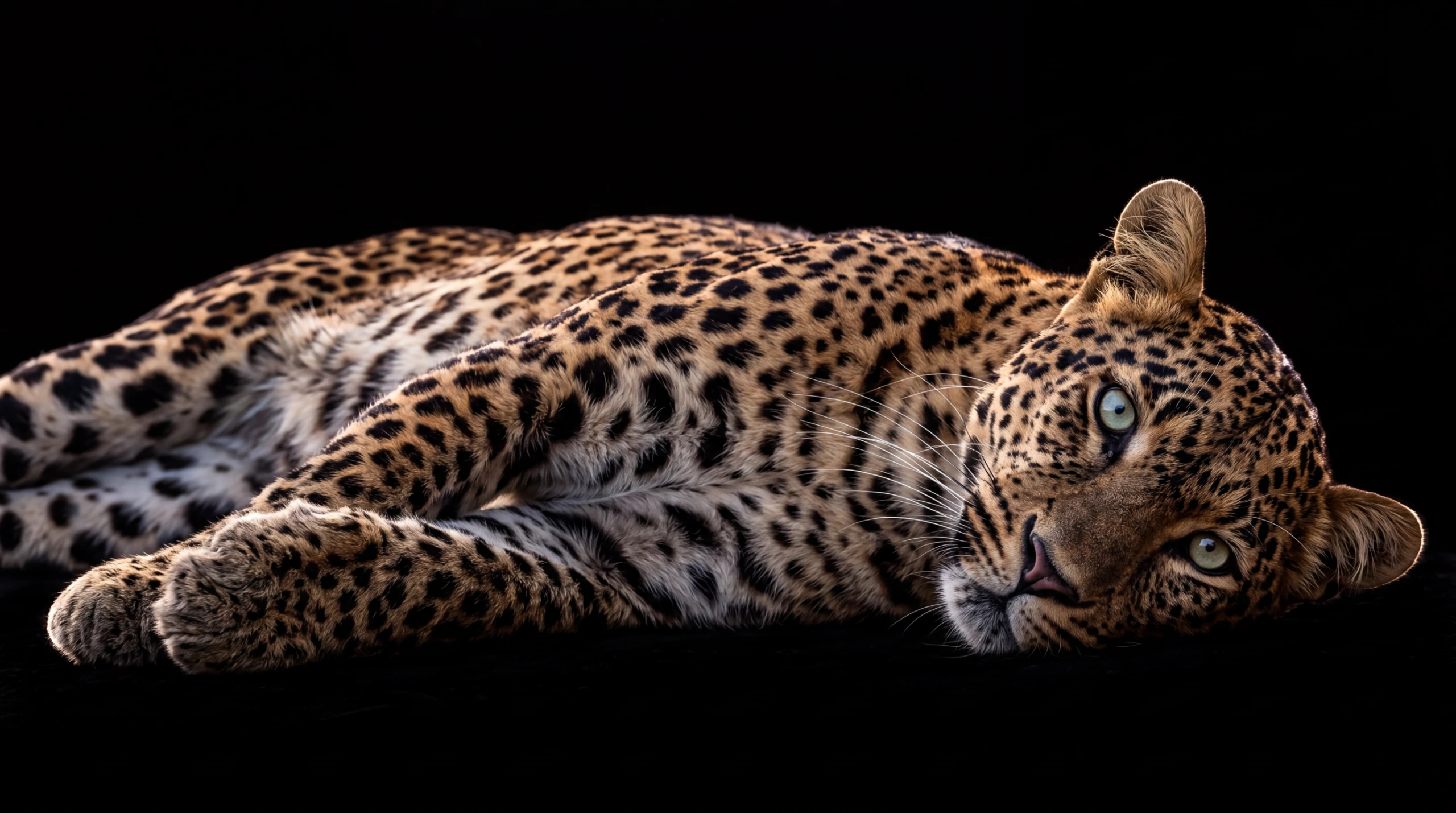
A leopard on black. Left: on an ordinary white screen. Right: on a Qualia Forge surface.
Ordinary white screen Qualia Forge surface
Ordinary white screen {{ demo.vW }}
Qualia Forge surface {{ demo.vQ }}

An illustration of the idea, not a measurement. To see the real thing, request a demo.

“Won’t a dark screen make the picture dim?”

No. The projector’s light arrives straight on, and the surface sends it back to every seat. Lamps and windows light it from other angles, and the weave soaks that light up. Deeper shades do ask for more projector power, so the shade and the projector are chosen together.

02 · In use

Already at Work.

A concert, a trade show and a walk-in night sky.

More projects →
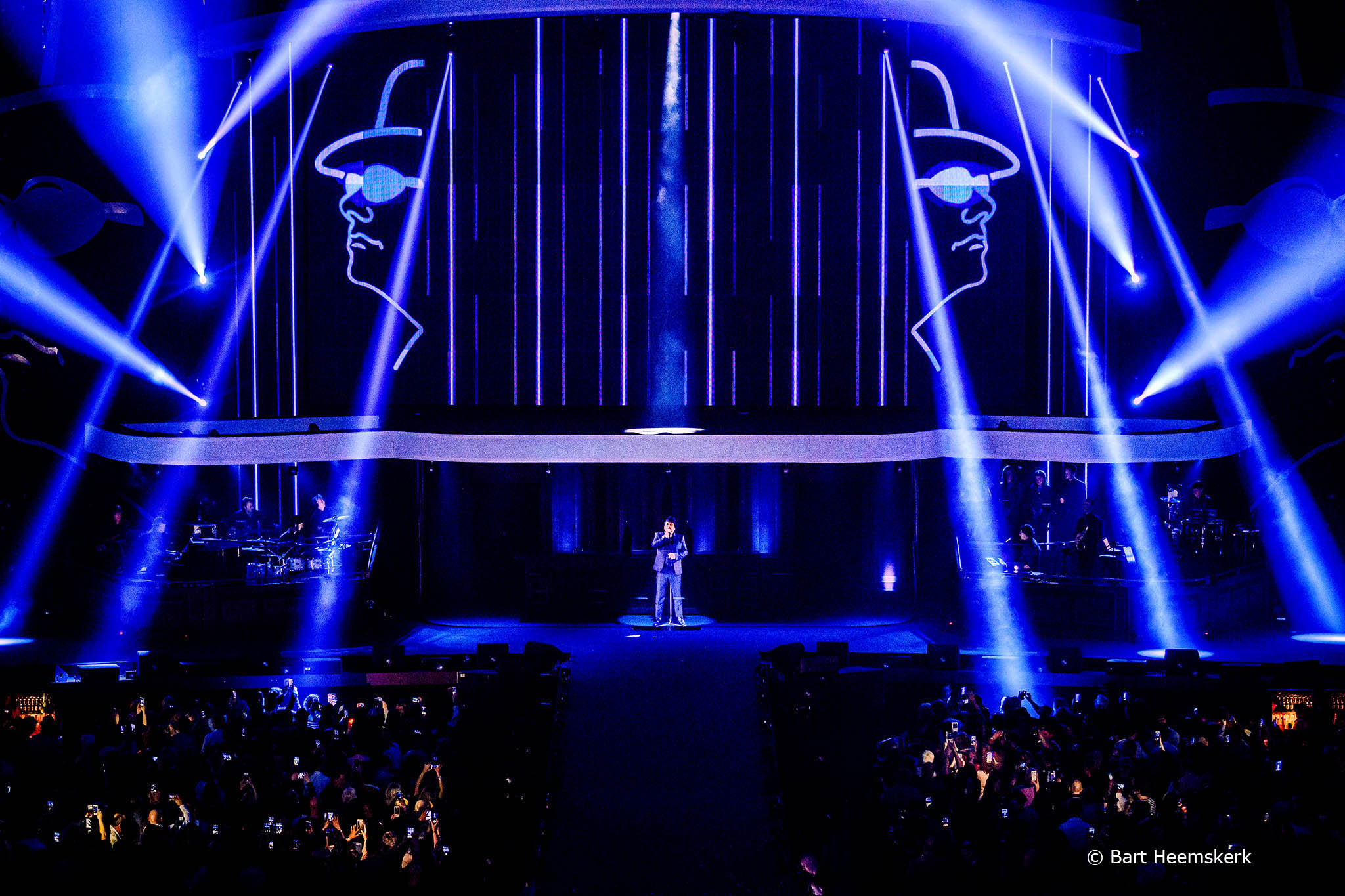
An arena under blue show lights, with a hologram of André Hazes singing at center stage Transparent Scrim

André Hazes, live

Ziggo Dome, Amsterdam

A hologram concert. The screen was 49 ft (15 m) wide, weighed 4.4 lb (2 kg), and the audience never saw it.

Photo · Bart Heemskerk
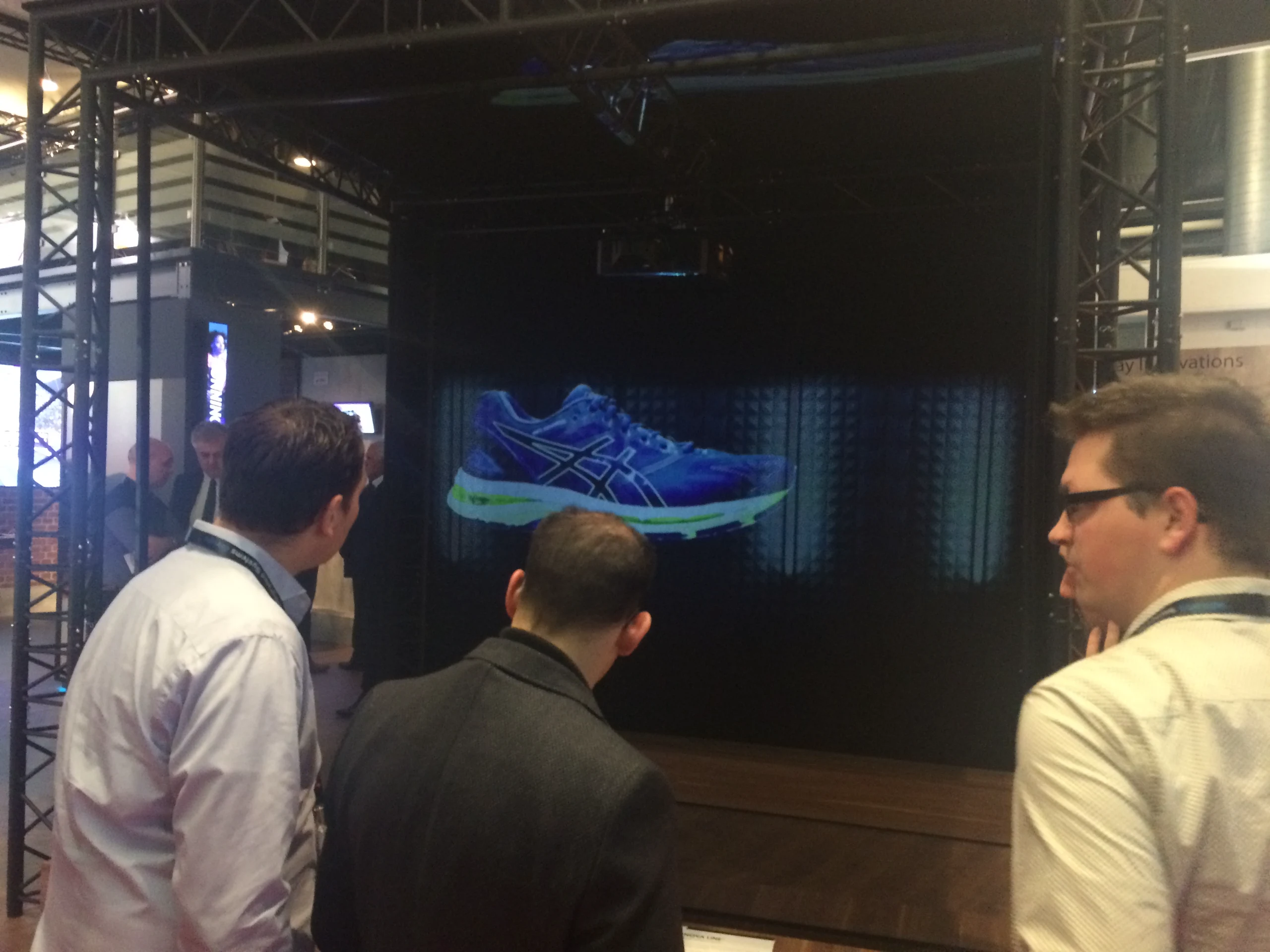
Trade show visitors watching an ASICS running shoe floating in mid-air Transparent Scrim

ASICS, floating

Trade show

Shoes hung in mid-air in a hall lit like noon. Visitors could step behind the picture and wave a hand through it.

Acoustically Transparent

The Concave

Los Angeles

A 50 ft (15 m) curved night sky in Panther, our darkest shade, with the speakers hidden behind it. Come to Hollywood and see the surface in person.

03 · The kinds

Three Kinds, for Three Jobs.

The same picture on each. What changes is what passes through.

A leopard shown on a solid screen

100% Opaque

OP

A solid picture.

Nothing passes through it. The everyday choice for walls, stages, curves and domes.

Projector in frontPanther to Luna
The same picture, with speakers hidden behind the screen and sound passing through

Acoustically Transparent

AT

Sound comes through.

Speakers hide behind the picture, so the sound comes from the image itself. No holes in the surface.

Projector in front or behindPanther to Luna
The same picture floating on a see-through scrim, with the stage visible behind it

Transparent Scrim

TS

The picture floats.

A see-through fabric. Black in the picture shows nothing, so the image seems to hang in mid-air. For reveals and hologram-style effects.

Projector in front or behindWisp, Mirage, Dew
04 · The names

Every Shade Has a Name.

Remember the name. The shades run from Panther, the darkest, to Luna, the brightest.

The rule for solid screens

More light in the space, darker shade.

Think of sunglasses: the brighter the day, the darker the lens. A darker shade also needs a stronger projector.

The solid shades

For 100% Opaque and Acoustically Transparent
Panther 0.8

The darkest shade. For spaces that stay bright.

Hero 0.7

Nearly as dark, and copes with the lights up.

Legend 0.6

The all-rounder. Where most projects land.

Lore 0.5

Brighter. For big pictures in darker spaces.

Luna 0.4

The brightest. For dark spaces or smaller projectors.

PhoenixTaller than 17 ft? Any solid shade can be built as Phoenix: seamless, or virtually seamless, at full height.

The scrims

For Transparent Scrim

Scrims flip the rule. More light in the space calls for a brighter scrim, so the picture still reads.

Wisp 0.8

The most see-through, and the most convincing float. Wants a dark space.

Mirage 0.6

The balanced middle, between subtle and solid.

Dew 0.5

The brightest scrim. Reads in more light.

Reading a full name You’ll see the full name in our tools and datasheets, and the code on an order.
Hero The shade
AT The kind
0.7 How dark · higher is darker
AT07 The order code
05 · Versus LED

Why Not Just Use an LED Wall?

LED walls make their own light, which is why they win in full daylight. They are also built from heavy tiles, cost more and need a lot of power. Side by side:

White screen Qualia Forge LED wall
Deep black with the lights on No Yes Yes
One seamless piece Yes Yes No, tiles
Clean on camera Yes Yes Moiré risk
Lightweight to hang Yes Yes No, heavy
Needs no power of its own Yes Yes No
Affordable to own and run Yes Yes Costly
Curves and domes Yes Yes Hard
Full daylight No No Yes

In short: in a lit space you get the deep black people buy LED for, plus the scale, low weight and clean camera image of projection. In full daylight, LED is still the right tool.

The full comparison →
06 · Pick yours

Which One Is Yours?

Tap your answers. The suggestion updates as you go, and you can send it to us with your demo request.

What should it do?
How much light is around it?
Projector power, for the size of the picture?
How tall is the picture?
Start with {{ res.name }} · {{ res.family }} Details ↓
Start with
{{ res.name }} {{ res.family }}
Full name: {{ res.full }}
Phoenix build Over 17 ft tall: seamless, or virtually seamless.

{{ res.note }}

{{ res.caution }}

Request a demo of {{ res.name }}

A starting point, not a quote. The demo button opens an email with your answers filled in. Want exact numbers? The configurator works it out with your projector and size.
07 · Quick answers

Short Questions, Short Answers.

Does it look good on camera? Yes. No flicker, no wavy lines, no tiles to color-match.
Do the side seats get a dimmer picture? No. It keeps at least 85% of its brightness, even from far to the side.
How big can it go? 39 × 300 ft. Tall by wide. That’s 11.9 × 91 m. Over 17 ft tall, it’s our Phoenix build: seamless, or virtually seamless.
Can it curve? Yes. Curves, domes and unusual shapes, because it’s one continuous piece.
Can it go on tour? Yes. It packs into road cases and rigs in minutes.
Does the screen need power? No. Only the projector plugs in. The surface draws no power and makes no heat.
Can the projector hide behind it? Sometimes. Yes with Acoustically Transparent and Transparent Scrim. 100% Opaque takes the projector in front.
Is it fire rated? Yes. Certified to NFPA 701 and DIN 4102-1 Class B1.
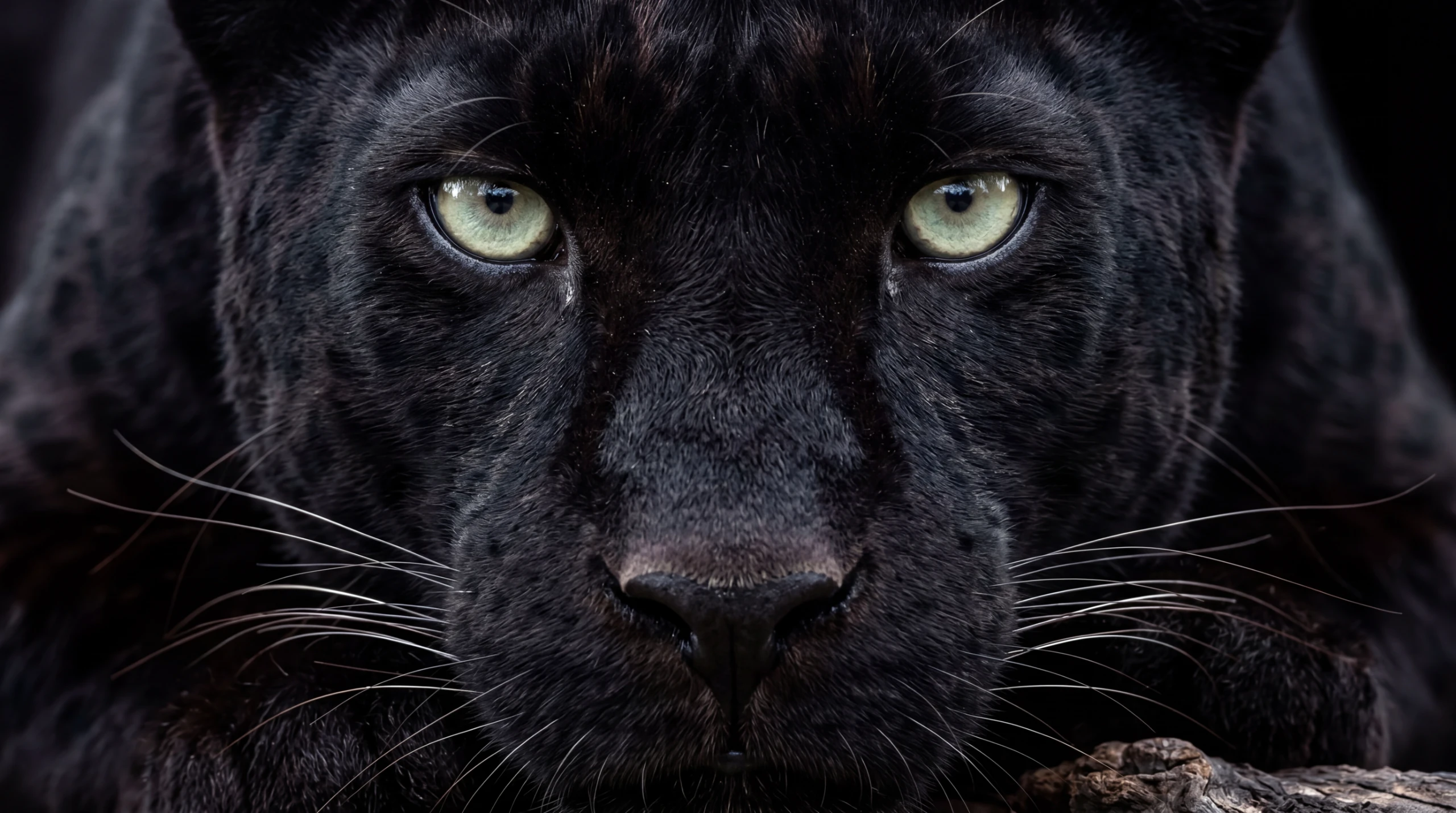
A black panther looking straight ahead, its eyes bright against deep black
08 · See it

See It for Yourself.

Come to Hollywood, Los Angeles, and see it with your own eyes, or we’ll arrange a demo around your project.

  1. Tell us what you want to achieve.
  2. We reply within one calendar week.
  3. You see it in person, in Hollywood or around your project.
Request a demo Read the full version

Your pick so far: {{ res.pickLine }} · Send it with your request →

Appendix · The words

Screen Talk, Decoded.

Words you’ll hear from installers and on spec sheets, in one line each.
Light

Ambient light
All the light in a space that isn’t the picture: lamps, windows, stage lights.
Lumens
How much light a projector puts out. More lumens, brighter picture.
Lux
How much light lands on a surface. A dark cinema is under 20 lux; a working office is a few hundred.

Picture

Black level
How dark the darkest part of the picture really gets.
Contrast
The gap between the brightest white and the darkest black. A bigger gap looks richer.
Washed out
When light in the space lands on the screen and turns black into gray.
Moiré
Wavy stripes a camera can pick up when it films the pixel grid of an LED wall. A projection surface has no grid, so there’s nothing to catch.

Screen

Gain
A number some screens quote for looking brighter from the middle seat, at the cost of the side seats. Ours stay even across the seats, so there’s no gain number to give.
Scrim
A see-through fabric that a picture can float on.
Seamless
One continuous piece, with no joins to see.

Setup

Front or rear projection
Front: the projector sits on the audience side. Rear: it hides behind the screen.
Throw
How far the projector sits from the screen. The planner works it out for you.