National Pavilion·World Expo · Astana·Honored · International Design Awards
Low Land, High Energy.
How does a country below sea level become a driving force in energy? A nation's mindset, staged in four acts, for an Expo devoted to the future of power.
JourneyFour acts
Pavilion400 m²
Nations on site115
RoleCreative solutions agency
01 · The commission
A Mindset, Given a Building.
After an extensive tender, the Dutch Ministry of Foreign Affairs and the Netherlands Enterprise Agency entrusted Qualia Forge with the national pavilion whole: concept, design, and realization under one roof, as creative solutions agency. The brief was not a list of exhibits. It was a temperament: the particular Dutch way of turning a disadvantage of geography into an engine of invention, told to millions of guests from 115 nations, most of whom would give it twenty minutes.
02 · The experience
Four Acts, One Waterline.
Act I · Daylight
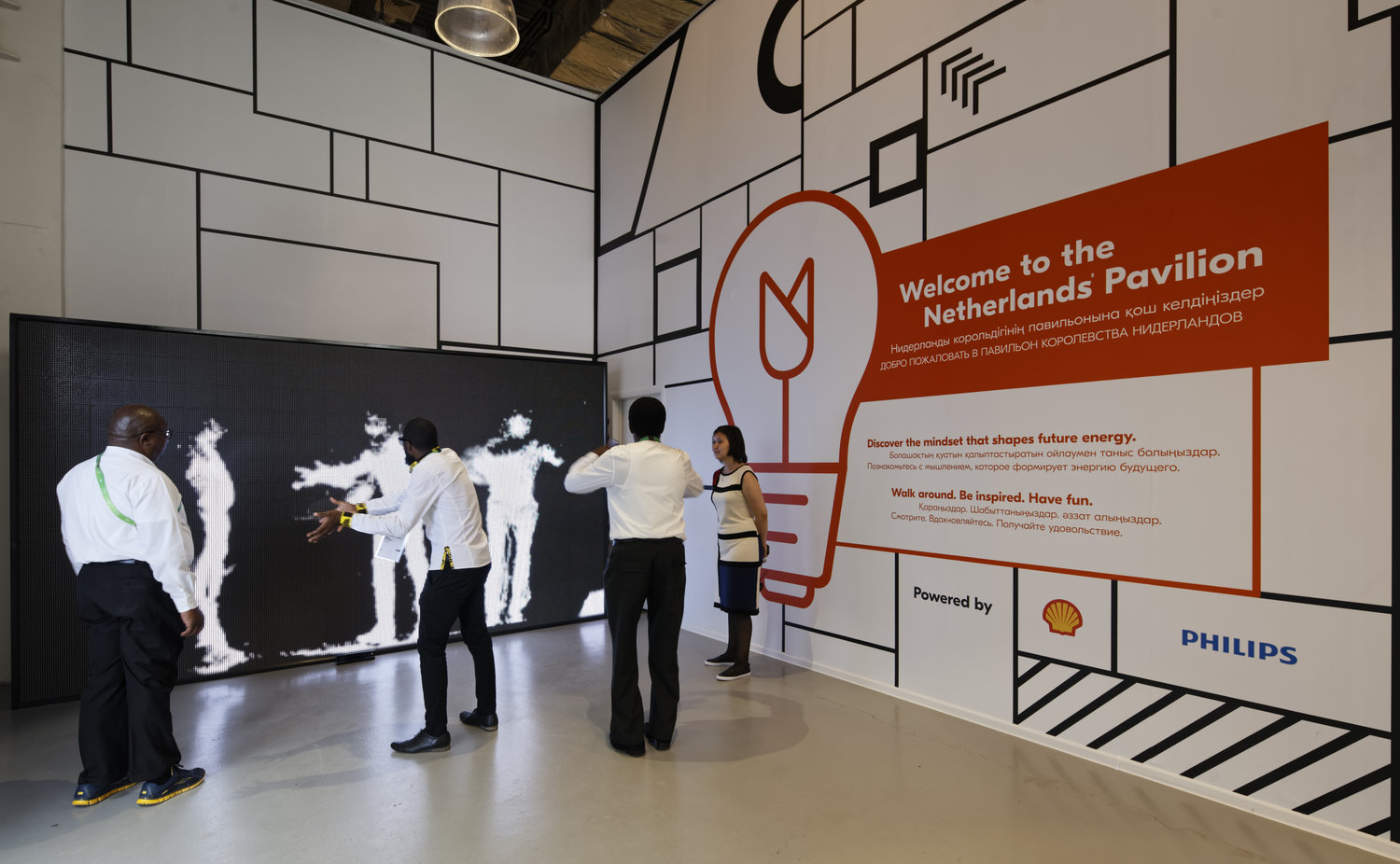
The Mindset, Drawn in Line
A bright pre-show of Dutch invention: science, water, agriculture, energy, drawn in white, black, and vivid orange, a graphic language borrowed from the country's own design tradition. Guests arrive above the waterline, in full light.
Act II · Descent
Below the Waterline
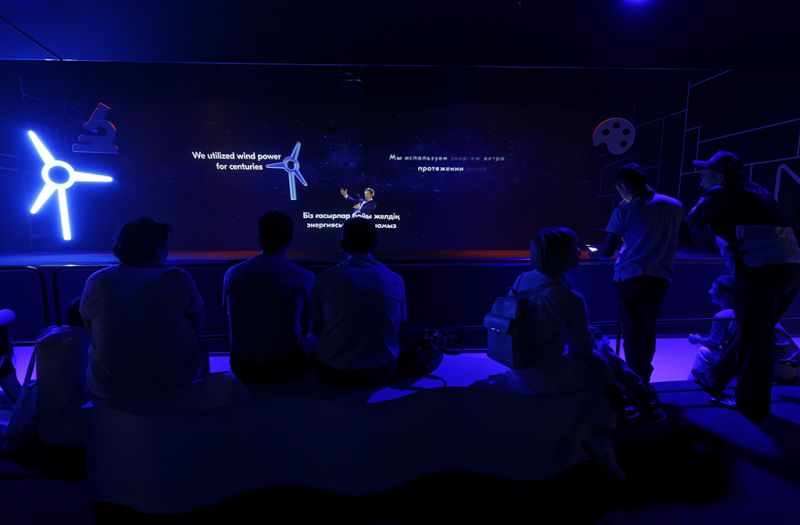
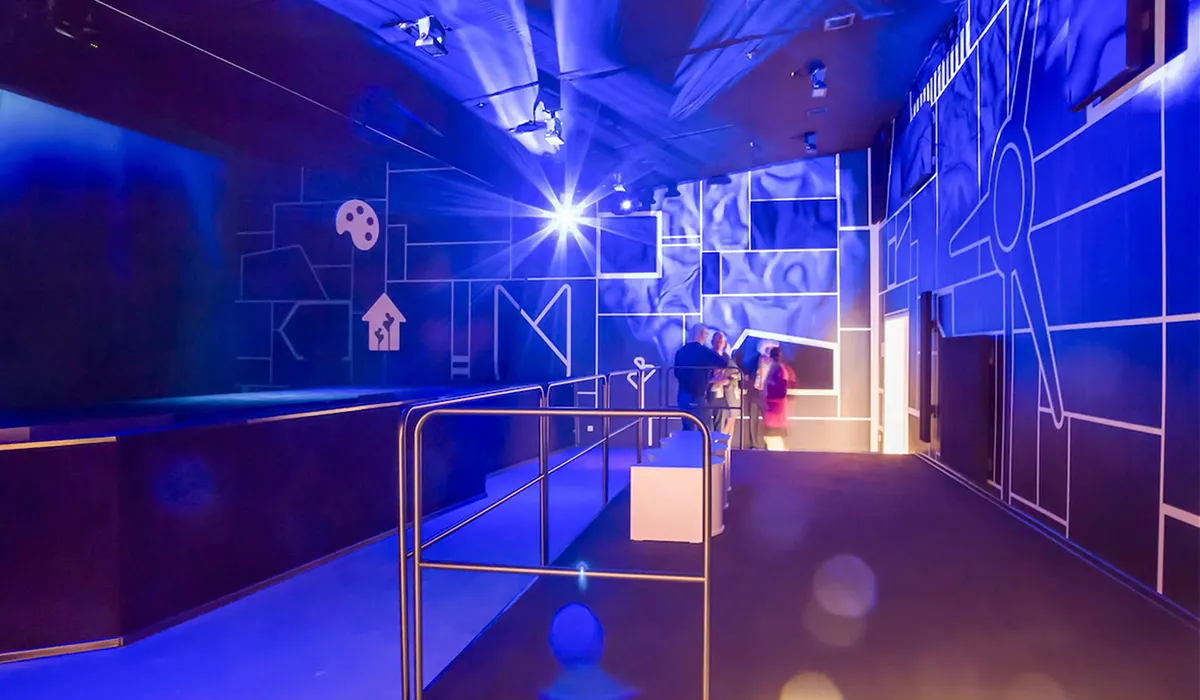
Then the light falls. Deep blue and violet place every guest symbolically under the sea, the condition the Netherlands has negotiated with for a thousand years. The change is felt in the body before it is understood.
Act III · The main show
Light with Depth
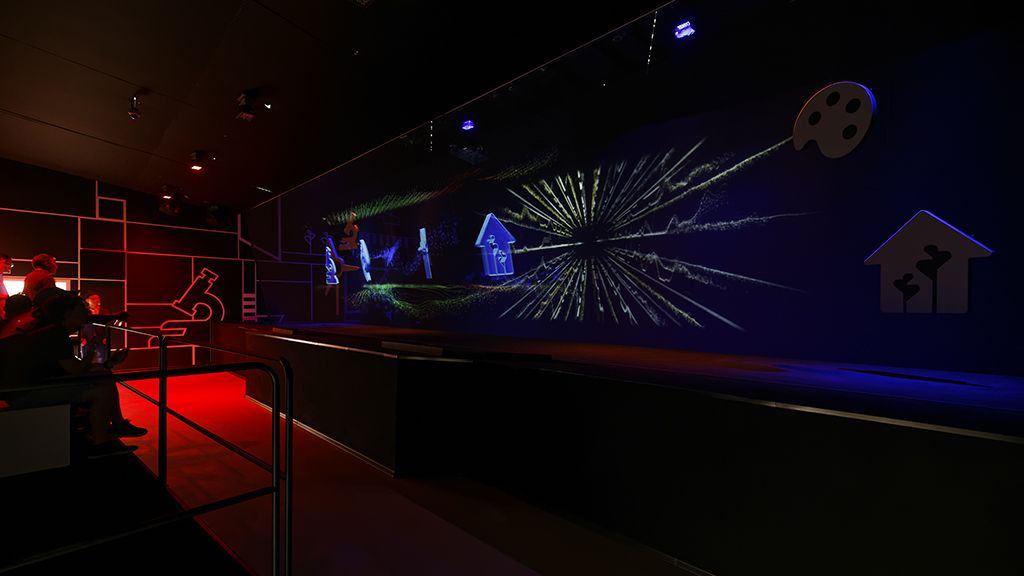
The heart of the pavilion: a multilayer holographic show, projected by Mann CG, our technology wing, onto layered transparent screens. Film, sound, and spatial graphics hold a depth no flat image can carry, and the story of future energy plays out inside it.
Act IV · Return
Back to Daylight
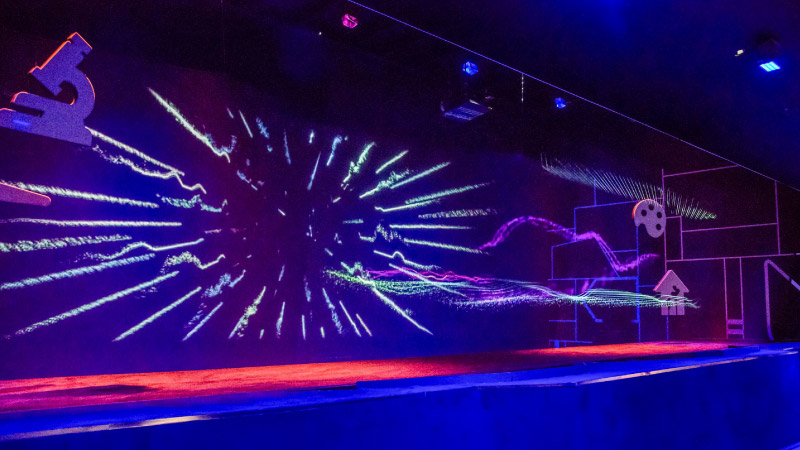
The show's final burst is the last thing guests hold in the dark: the audience in red light, the icons of Dutch invention glowing from the walls. Then the lights rise, and hands-on exhibits, hospitality, and trade carry them back above the waterline with the one sentence the pavilion exists for: low land, high energy. The only Expo test that matters is what is still remembered at dinner.
03 · The storyboard, drawn by hand
Before a Single Projector: Pencil.
This is the working document the main show was born from: the complete storyboard, more than eighty numbered frames across twenty-nine sheets, drawn by hand at Mann CG. Every sheet carries the screen geometry of the holographic theatre: the active field, the side screens, the floor reflection, so that a pencil line made in the studio would land, months later, on the correct plane of a building that did not yet exist. Lightning over dark water, the dancer who carries the energy, the windfarm rising, the tulip resolving out of light: the whole show is already here, at the speed of drawing.
01 / 29
Sheets from the original working set, reproduced as drawn. Each frame is annotated with its cue; the colored margins mark what each surface of the theatre carries. Click any sheet to open it at full size.
04 · The people made of light
A Hologram Is a Performance, Captured Against Nothing.
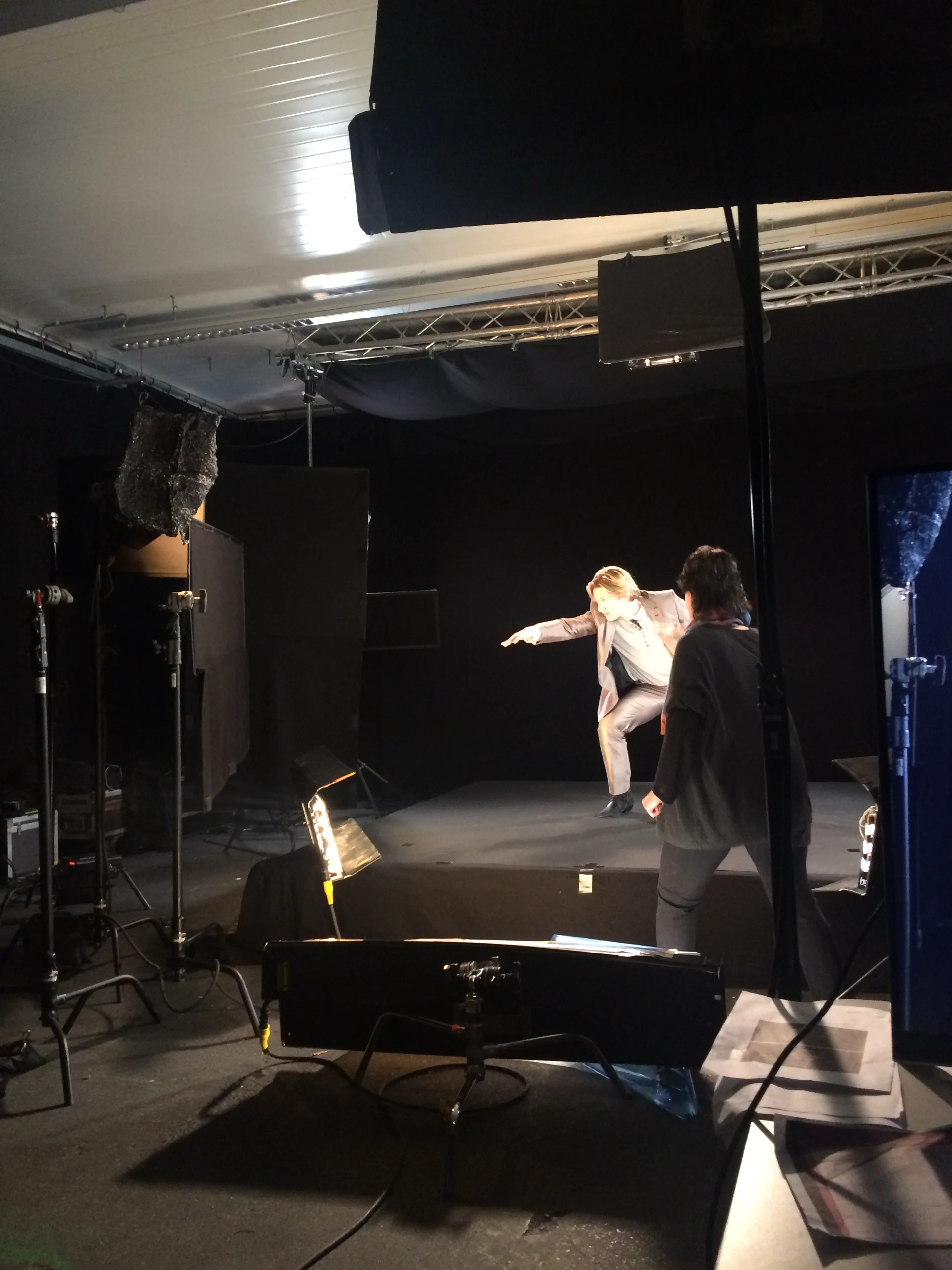
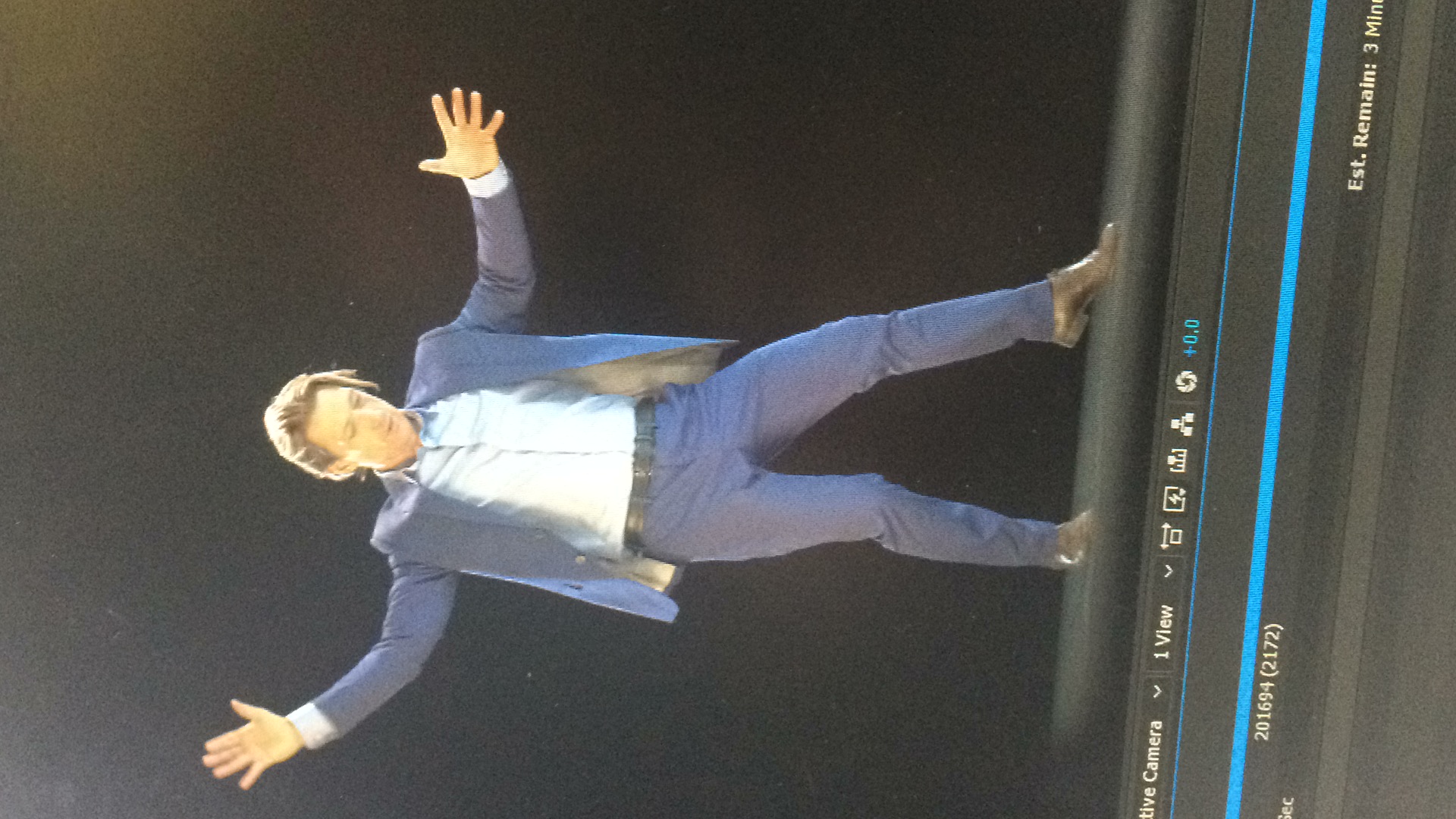
The guide who carries the audience through the show, part host, part dancer, never stands on the pavilion stage. He is made of light on a transparent projection surface, and getting a human being to survive that trick means designing the capture backwards from the screen. The performer works on a riser built to the exact height of the show stage, shot straight-on at the audience's eye line with a lens matched to the theatre's viewing distance, so the pavilion never sees a perspective it does not have. The studio is dressed to true black, and there is no green screen, because a transparent surface keys itself: whatever is lit becomes image, whatever stays black becomes air. So the light does the compositing. Banks of soft sources model the performer the way the show's own palette will, flags hold the edges clean, wardrobe sits a stop brighter than anything behind him. In post, every take is isolated on pure black and graded until the darkest values fall below the surface's threshold of visibility. What walks onto the glass line in Astana is therefore not an animation. It is him, life-size, feet grounded, hair and sleeves carrying real motion, a performance that happened, kept.
The capture stage · black void, riser at show heightPost · the guide isolated on black, render counting down